
Technical notes
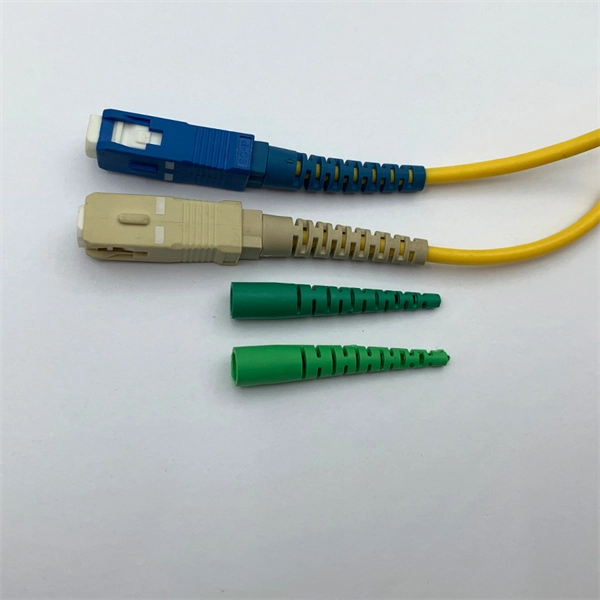
Multi-mode optical fiber
OverviewApplicationsComparison with single-mode fiberTypesEncircled fluxExternal links
Multi-mode optical fiber is a type of optical fiber mostly used for communication over short distances, such as within a building or on a campus. Multi-mode links can be used for data rates up to 800 Gbit/s. Multi-mode fiber has a fairly large core diameter that enables multiple light modes to be propagated and limits the maximum length of a transmission link because of modal dispersion. The standard G.651.1 defines the mos
Multimode Fiber Types: OM1 vs OM2 vs OM3 vs OM4 vs OM5
Multimode fiber (MMF) is a kind of optical fiber mostly used in communication over short distances, for example, inside a building or for the campus. Multimode fiber optic cable has a larger
Fiber Optic Cable Types: Single-Mode, Multimode, and Beyond – A
Discover fiber optic cable types, including single-mode (OS1, OS2) and multimode (OM1, OM2, OM3, OM4, OM5), indoor/outdoor variants, and how to select the best option for data centers,
Single Mode vs Multimode Fiber Cable
Multimode fiber cables are the type of fiber cables that transmit data via their core of larger diameters enable an average, single-mode transceiver multiple modes of light to propagate
Singlemode vs Multimode Fiber Optic Cable
Multimode fiber optic cable allows multiple modes of light transmission simultaneously. It has a larger core diameter, typically 50 or 62.5 microns, which enables it to carry multiple light rays
Single Mode vs. Multimode Fiber: Core Differences and Selection Guide
Single mode fiber typically has a core diameter of about 9 µm, which allows only one mode of light to propagate. In contrast, multimode fiber has a larger core, usually 50 µm or 62.5 µm,
Fiber Optic Cable Types Explained
Our comprehensive guide to types of fiber optic cables. Learn all about the differences between single mode and multimode cables, as well as the various fiber wavelengths and standard core sizes used
Fiber Optic Cable Types | Omnitron Systems Guide
Explore fiber optic cable types, features, and applications. Omnitron Systems explains single-mode, multi-mode, and specialty fiber solutions.
OM1 vs OM2 vs OM3 vs OM4 vs OM5 Multimode Fiber Guide | EDGE
Compare OM1, OM2, OM3, OM4, and OM5 multimode fiber specs, distances, bandwidth, and applications. Essential guide for data center fiber selection.
Fiber Optic Cable Types | Omnitron Systems Guide
Conclusion Understanding fiber optic cable types, fiber core sizes, and proper installation methods is essential for building high-speed, reliable fiber networks.
Multimode Fibers – optical glass fiber, large-core fibers,
Multimode fibers are fibers supporting more than one guided mode per polarization direction – in some cases even a large number of modes.
What is the difference between multimode and singlemode fibre optic cable?
Fibre cables vary enormously, in the type of fibre, the construction and materials and the number of fibres present. Optical fibres are extremely thin strands of very high purity silica (glass), which
Single & Multimode Fiber Optic Cable: What''s the
Fiber optics can transmit data faster and over longer distances than other technologies, making it the foundation of contemporary data transmission.
Single-mode optical fiber
In fiber-optic communication, a single-mode optical fiber, also known as fundamental- or mono-mode, is an optical fiber designed to carry only a single mode of light - the transverse mode. Modes are the
Understanding the Difference Between Single Mode vs
Dive into the technical world of fiber optic cables with Ascentoptics. Understand the nuances between single mode and multimode fibers. Discover now
fiber optic cable multimode versus singlemode duplex vs simplex
Multimode Multimode fiber optic cable has a large-diameter core that is much larger than the wavelength of light transmitted, and therefore has multiple pathways of light-several wavelengths of light are
Fiber Optic Cable Types – Multimode and Single Mode
Application Fiber Optic connectors and cables are present in nearly every communications project that we might sell into, be it a DAS installation or a Base Station with wireless backhaul, you can be
What is the Difference Between Single-Mode and
This article delves into the key distinctions between single-mode and multimode fiber optic cables, exploring factors such as design, performance,
Related Video Reference
This video was associated with the source search result. Verify technical details against current product documentation and project requirements.