
Optical Insertion Loss
Account for cable attenuation, connector and splice losses and margin before selecting link equipment.
- Optical
- Insertion
- Loss
Articles and technical references
10 on this page-
Insertion Loss of Optical Attenuators
Insertion loss, also known as attenuation, is the loss of optical power that occurs when light passes through a fiber optic connector. It is caused by factors such as misalignment, air gaps, and imperfections in the connector components. If an optical device is inserted into...
-
Optical splitter national standard insertion loss
Testing a splitter or other passive fiber optic devices like switches is little different from testing a patchcord or cable plant using the two industry standard tests, OFSTP-14 for double-ended loss (connectors on both ends) or FOTP-171 for single-ended testing. Optical...
[PDF Version]
-
Optical loss of optical module
Optical losses are caused by light reflection and absorption in the front stack of module materials, as well as by light incidence on inactive module areas, such as the module perimeter, cell interspaces and top contacts. Losses can be divided into intrinsic and. Insertion...
[PDF Version]
-
Packet loss rate in optical fiber transmission
For multimode fiber, the loss is about 3 dB per km for 850 nm sources, 1 dB per km for 1300 nm. 5 dB/km max per EIA/TIA 568) This roughly translates into a loss of 0. A significant signal loss in the optical fiber can cause unreliable transmission and potentially result in...
[PDF Version]
-
FTTH uses optical circulators for low loss
Here, we present a solution to this issue by realizing low-loss (0. 81 dB), broadband (at least 50 GHz bandwidth) and high-extinction (up to 27 dB) circulators, based on Mach-Zehnder interferometers including so-called fiber null-couplers. The latter are directional couplers...
[PDF Version]
-
LPO Optical Module Low Loss Overseas Warehouse
Designed for AI/ML applications, this advanced 800G DR8 OSFP finned top LPO module enables high-speed data transmission with ultra-low power consumption, reduced latency, and superior cost efficiency. Amphenol XPO-LPO optical transceiver delivers next-generation 12. 8T...
[PDF Version]
-
Checking Optical Port Loss on Huawei Switches
This document describes how to check the switch interface or port status and how to locate an interface physically down fault and restore the interface to the up state. Hardware failures: include hardware. Optical transceivers are widely applied in switches, network cards...
-
Fiber optic patch cord loops affect optical loss
In modern fiber optic installations, one of the most common yet underestimated mistakes is creating unnecessary loops or tight bends in the cable. These loops may seem harmless but can result in significant signal attenuation, compromising network performance. Insertion loss...
[PDF Version]
-
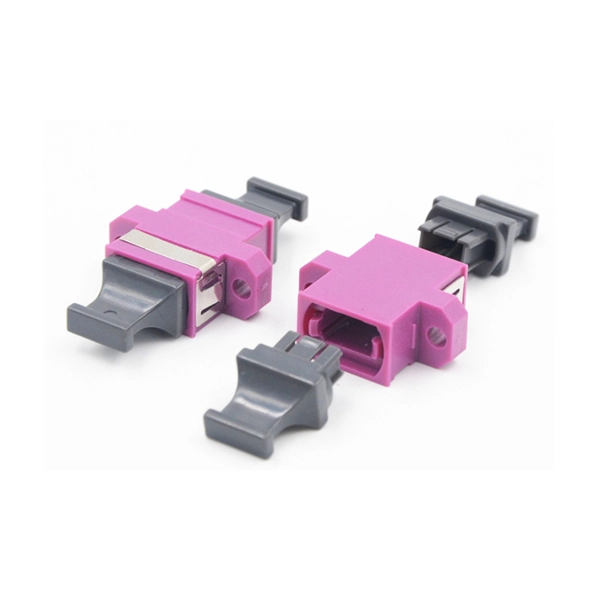
Loss Point Tested by Optical Time Domain Reflectometer
An optical time domain reflectometer (OTDR): this technique utilizes pulse of light to measure the loss along a fiber optic link. OTDR testing analyzes fiber optic cable performance from end to end by testing components along the cable, including connection points, bends, and...
[PDF Version]
-
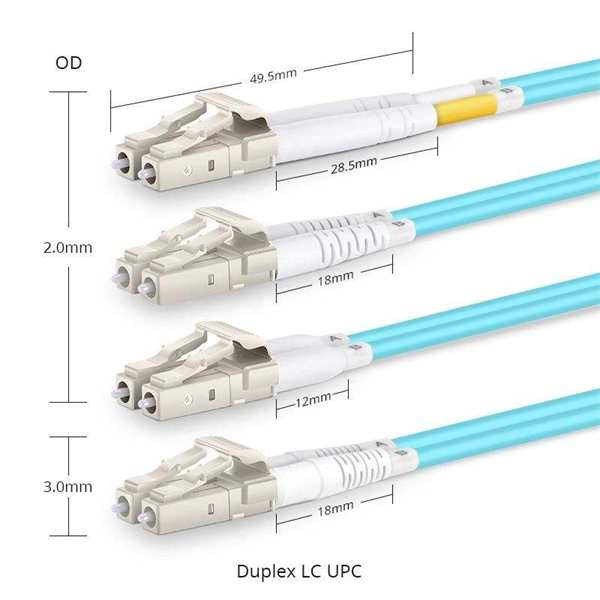
Solving Loss Problems in Optical Fiber Communication
Check Fiber Cables : Look for visible damage, sharp bends, or loose connectors. Clean Connectors : Use lint-free wipes and isopropyl alcohol to remove dust or oil. Fiber loss, also called fiber optic attenuation or attenuation loss, refers to the loss of signal between input...
[PDF Version]