
Bit Error Rate Ber In Optical Links Causes And Mitigation
Search optical fiber, connectivity, cable management and network infrastructure references.
- Error
- Rate
- Optical
Articles and technical references
9 on this page-
How to use a handheld optical communication bit error rate meter
With the bandwidth and performance demands on Ethernet networks increasing daily, BERT has become essential for quantifying bit error rate in optical fiber communication channels and establishing confid.
-
Optical Module Bit Error Rate and FEC
When FEC is not used, the system bit error rate (BER) at the 1e-15 level requires a 22 dB optical signal-to-noise ratio (OSNR). Using FEC saves 11 dB OSNR for the system. The decrease in the. Optical transmission is vulnerable to various sources of signal degradation...
[PDF Version]
-
Optical Communication Bit Error Meter Calibration in Poland
178 PCA-accredited ISO/IEC 17025 calibration labs in Poland — find one to calibrate your equipment. Bit Error Rate (BER) is a critical performance metric in optical communication systems, representing the ratio of erroneous bits to the total number of transmitted bits. The...
[PDF Version]
-
Bit Error Rate Calibration Jordan
In, the number of bit errors is the number of received of a over a that have been altered due to,, or errors. The bit error rate (BER) is the number of bit errors per unit time. The bit error ratio (also BER) is the number of bit errors divided by the total number of...
-
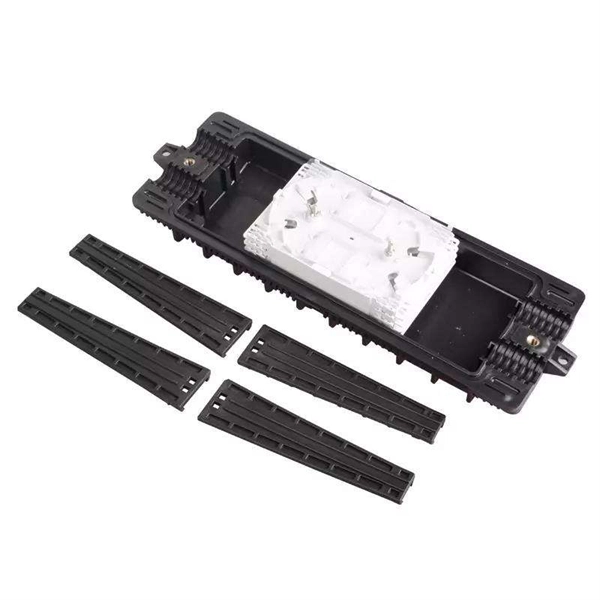
Packet loss rate in optical fiber transmission
For multimode fiber, the loss is about 3 dB per km for 850 nm sources, 1 dB per km for 1300 nm. 5 dB/km max per EIA/TIA 568) This roughly translates into a loss of 0. A significant signal loss in the optical fiber can cause unreliable transmission and potentially result in...
[PDF Version]
-
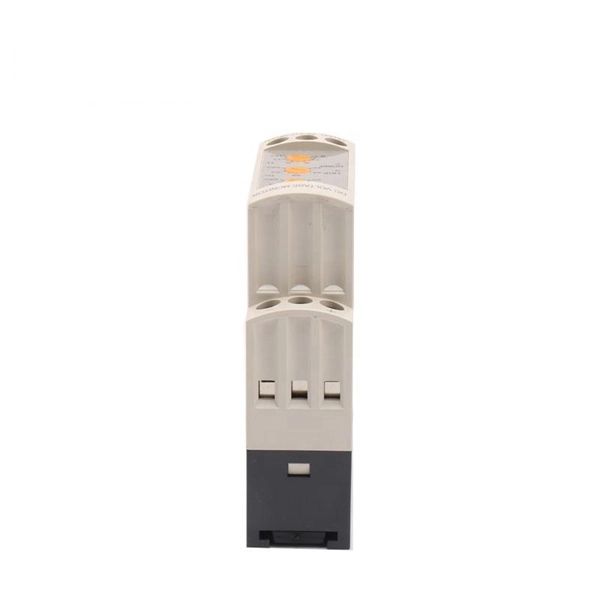
Do single-mode and dual-mode optical modules have the same data rate
Single-mode fiber uses a 9/125 µm core/cladding structure that supports only one propagation mode, which minimizes modal dispersion and allows signals to travel tens of kilometers with low attenuation. Multimode fibers have larger cores (typically 50/125 µm or 62. 5/125 µm)...
-
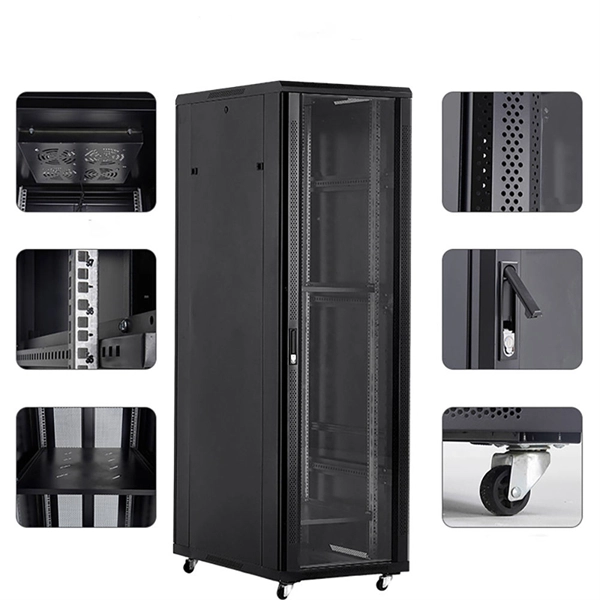
Causes of Bit Errors in Optical Communication Equipment
What causes bit errors in optical data transmission? In optical systems, bit errors are often caused by noise in receivers and amplifiers, optical losses, signal distortion from chromatic dispersion, and nonlinear effects within the transmission fiber. How is the bit error...
[PDF Version]
-
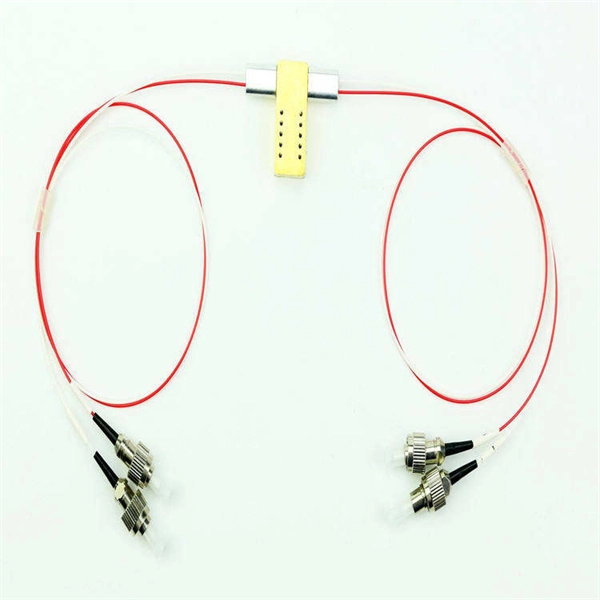
The incoming flow rate of the optical splitter is used for optical splitting
An optical splitter is a small, passive device—no power needed! —that splits one incoming light signal into multiple identical outputs. You'll often see ratios like 1:8, 1:16, 1:32, or even 1:64, which tell you how many ways the signal is divided. By understanding these...
[PDF Version]
-
Is the error large in optical power meter tests
As shown in NIST studies [2-4], OFPMs can exhibit significant errors when measuring absolute power of radiation delivered through connected fibers. An optical power meter (OPM) is a device used to measure the power in an optical signal. All are written in the same...
[PDF Version]