
Technical notes
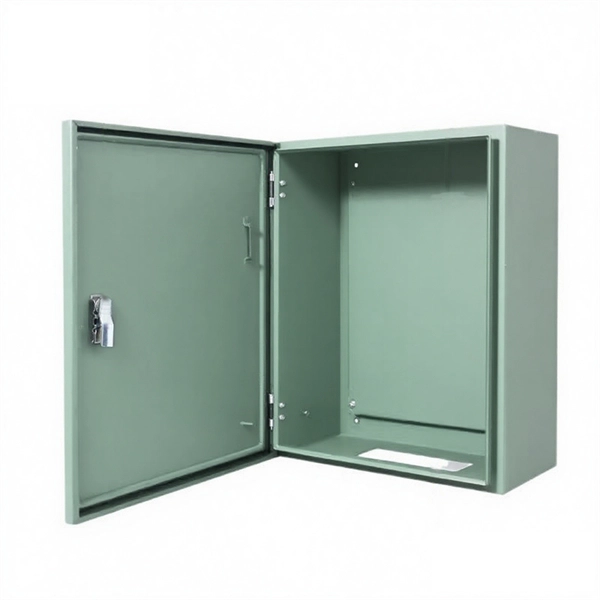
Instrument Junction Boxes
Junction boxes can be manufactured in a variety of materials including stainless steel, mild steel, glass reinforced polyester, aluminum, polycarbonate and ABS (Acrylonitrile butadiene styrene - a
Junction Boxes & Pull Boxes: Design, Materials, and
By understanding the distinct design elements, materials, and ratings of junction and pull boxes, you can select a solution that ensures safety,
ITER Cabling Handbook
Cable tray sections must be in accordance with the cable types and/or the number of cables installed in it, respecting the maximum filling ratio, according to the cable tray type.
Box Fill Calculator
Use this box fill calculator to find the correct size of electrical utility box to fit the conducting wires, grounding wires, and devices or equipment you would need to install and have it pass the National
Electrical Boxes Volume and Fill Calculations
Part (B), “Box Fill Calculations,” describes the method for determining how much volume (fill) may be occupied by conductors, clamps, support fittings, devices (switches or receptacles) or equipment,
Guidance Notes on Recommended Specifications of Junction Box and
These Guidance Notes provide ABS recommendations for the design and construction of cable trays and junction boxes. These Guidance Notes are applicable to fixed and floating offshore structures as
Terminal boxes | thuba Ltd.
The requirements of EMC terminal boxes for use in instrumentation and control applications are met with our metal and interior coated housings. The coating in combination with the affordable cable entries
Crouse-Hinds series GHG7 Terminal Boxes catalog page
They are used as a link between the main cable to the control room and the branch cables into the field. In addition to this, they may also be used for the direct connection of actuators and sensors.
Electrical Materials Estimation Guide | PDF | Manufactured Goods
The guide details what to include in each step, such as measuring circuit lengths, counting devices, and accounting for labor. Following these steps allows one to thoroughly estimate project materials and
CALCULATION METHOD OF CABLE CONNECTOR
3) For all distribution boxes, cabinets, panels, and junction boxes, the incoming and outgoing wires of the terminal box are calculated according to the
MAIN TERMINAL BOX (Ex d)
7 8 9 RTD PT100 TERMINAL BOX (Ex e) SPACE HEATER TERMINAL BOX (Ex e) EARTH CABLE TERMINAL (2 X M12 - UNEL 06131/71 B) SHAFT END (UNI ISO/775 - DIN 748)
Ex e Terminal Box Practicalities
One of the EEHA areas in which we have noted a tendency towards what we''ll refer to as “over-compliance,” in recent times, is in the verification that power
Billing of Quantities (BOQ) | Types | Example BOQ | Advantages and
Bill of Materials Bill of Labour Basic Format for preparing BOQ The main sections included in the bill of quantities are Form of Tender, Information, Requirements, Pricing schedule, Provisional
Design, testing and simulation of main terminal box and rupture panels
Arc flash protection around electrical process equipment is paramount in any industrial setting, especially in the petroleum industry. Laboratory testing of motor terminal box structural integrity and
Increased Safety Terminal Box Power Dissipation
Increased Safety Terminal Box Power Dissipation Maximum dissipated power of Terminal Box Enclosure IEC 60079-14 Let us first define an Electrical Terminal / Junction Box An
Welcome to Doncaster Cables
6. Press calculate and your cable sizes will be calculated. Our calculator now lists different cable types, so by scrolling down the list you are able to see how different cable types may have different sizes for
Basics of Cable Design and Engineering for Power
Introduction to Cable Engineering Definition and Scope Cable engineering is a specialised domain focusing on the design, implementation, and
Cable sizing of sub-main electrical circuits (working examples)
A 3-phase sub-main circuit having a design fundamental current of 100A is to be wired with 4/C PVC/SWA/PVC cable on a dedicated cable tray.
Related Video Reference
This video was associated with the source search result. Verify technical details against current product documentation and project requirements.