
Technical notes
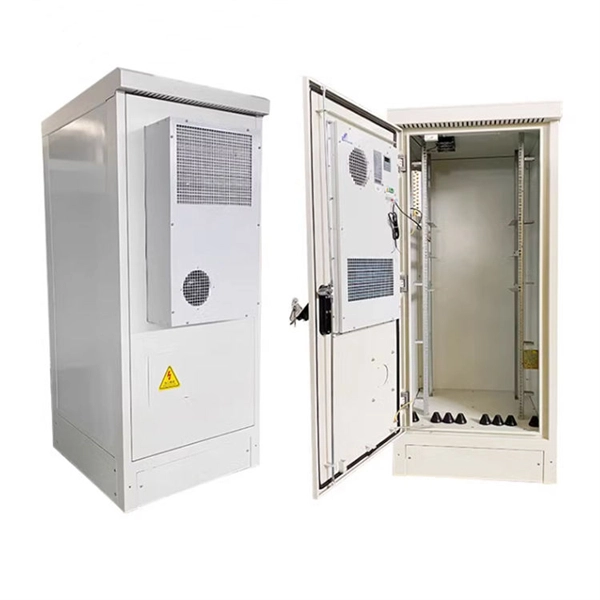
Complete Guide to 5G Base Station Construction | Key
Explore how 5G base stations are built—from site planning and cabinet installation to power systems and cooling solutions. Learn the essential
DC20161020.doc
Abstract: With the rapid development of mobile communication service, the construction of mobile communication base station presents the trend of rapid development, the distribution of base...
Mathematical Modelling of the Power Supply System of a Mobile
In this article, a mathematical model of the power supply system for a mobile communication base station is developed. Based on the developed mathematical model, the mobile communication base
Improving energy resilience in cellular base stations and critical
This article comprehensively analyzes each dimension, identifies existing research gaps, and proposes an integrated energy-routing and control structure that ensures uninterrupted operation
Algorithms for uninterrupted power supply to mobile communication
In this article, an algorithm for automatic control of energy sources was developed to improve the uninterrupted power supply of mobile communication base stations. Based on the proposed
Optimum sizing and configuration of electrical system for
This study develops a mathematical model and investigates an optimization approach for optimal sizing and deployment of solar photovoltaic (PV), battery bank storage and a diesel
Optimization Control Strategy for Base Stations Based on
Therefore, in response to the impact of communication load rate on the load of 5G base stations, this paper proposes a base station energy storage auxiliary power grid peak shaving method based on
Communications System Power Supply Designs
Voice-over-Internet-Protocol (VoIP), Digital Subscriber Line (DSL), and Third-generation (3G) base stations all necessitate varying degrees of complexity in power supply design. We discuss factors
Communication Base Station Energy Solutions
During the day, the solar system powers the base station while storing excess energy in the battery. At night, the energy storage system discharges to supply
Optimization of Communication Base Station Battery Configuration
In the communication power supply field, base station interruptions may occur due to sudden natural disasters or unstable power supplies. This work studies the optimization of battery
Energy-efficiency schemes for base stations in 5G heterogeneous
In today''s 5G era, the energy efficiency (EE) of cellular base stations is crucial for sustainable communication. Recognizing this, Mobile Network Operators are actively prioritizing EE for both
Communication power supply design based on PFC and LLC
In order to meet the high power and high stability requirements of communication base stations for power supply, this paper designs a dedicated 500W switch power supply for communication base
Power Base Station
If an adjacent base station transmission is detected under certain conditions, the maximum allowed Home base station output power is reduced in proportion to how weak the adjacent base station
Building a Better –48 VDC Power Supply for 5G and Next
Figure 3. A power supply for a 5G macro base station block diagram. Highlighted ICs The MAX15258 is a high voltage multiphase boost controller with an I 2 C digital interface designed to support up to two
Design Considerations and Energy Management System for Green
This paper presents the design considerations and optimization of an energy management system (EMS) tailored for telecommunication base stations (BS) powered by photovoltaic (PV) systems and
Telecom Base Station Backup Power Solution: Design Guide for 48V
Telecom Base Station Backup Power Solution: Design Guide for 48V 100Ah LiFePO4 Battery Pack With the rapid expansion of 5G networks and the continuous upgrade of global
Optimal Solar Power System for Remote Telecommunication Base Stations
This paper aims to address both the sustainability and environmental issues for cellular base stations in off-grid sites. For cellular network operators, decreasing the operational
Research on Design of Switching Power Supply Based on Mobile Base Station
Keywords: Mobile Base Station, Switching Power Supply, Control Circuit Abstract: With the rapid development of mobile communication service, the construction of mobile
Related Video Reference
This video was associated with the source search result. Verify technical details against current product documentation and project requirements.