Skip to content
AK OPTICALSystems Send a project enquiry
Reference library

Comprehensive Testing of Relay Protection Devices

Published
  • Comprehensive
  • Testing
  • Relay
Source context

AI source overview

Comprehensive testing of relay protection devices ensures reliable operation, system safety, and compliance with international standards through type, commissioning, functional, and EMC tests.

Overview of Relay Protection Testing

Relay protection devices are critical for safeguarding power systems by detecting faults and isolating affected zones. Comprehensive testing is essential because these devices primarily operate under abnormal conditions, which cannot be fully simulated during normal operation. Testing ensures that relays function correctly, protecting equipment, maintaining grid stability, and preventing service interruptions.

Types of Testing1. Type Testing Type tests verify that a relay meets its specifications and complies with standards such as IEC 60255, IEEE C37.90, and additional standards like IEC 61000, 60068, and 60529. These tests are performed at the manufacturer's facility and simulate real-world fault conditions to evaluate both hardware and software performance.

Type testing ensures relays are free from manufacturing defects and function reliably under abnormal power conditions. 2. Commissioning Tests Commissioning tests confirm that a relay configuration is correctly installed and operational before being set to work.

This includes verifying wiring, equipment installation, and the operation of individual components, followed by testing the complete configuration. These tests help detect equipment failures or service degradation before faults occur in the system. 3.

Functional Testing Functional tests involve applying appropriate inputs to the relay and measuring its response to ensure it meets performance specifications. These tests are conducted under controlled environmental conditions and can range from simple overcurrent relay checks to complex digital relay evaluations. Functional testing is crucial for verifying selectivity, sensitivity, speed, and reliability of protection devices.

4.

EM

C and Environmental Testing Electromagnetic compatibility (EMC) and environmental tests assess the relay's immunity to disturbances such as impulse voltages, surges, EFT/Burst, ESD, and power frequency variations. Equipment like combination wave generators, ringwave generators, and coupling/decoupling networks are used to simulate real-world electrical disturbances according to standards like IEC 61000-4-11, 4-16, and 4-18.

Modern Digital Relay Testing

With the rise of digital relays and IEC 61850-based substations, testing has evolved to include networked and software-driven approaches. Tools like Megger FREJA and SMRT relay test sets allow testing of IEC 61850 networks without a PC, enhancing cybersecurity. Software solutions such as RTMS, GOOSE Configurator, and Sampled Values Analyser enable automated testing, visualization of relay behavior, and asset management.

Maintenance and Verification Cycle

Regular verification and maintenance are critical to ensure relays operate correctly during faults. High-voltage users (60 kV and above) typically require annual verification, while lower-voltage systems may be tested every two years. Maintenance includes checking relay integrity, secondary circuits, wiring, and settings to maintain selectivity, speed, sensitivity, and reliability.

Key Benefits

Ensures safe and reliable operation of power systemsDetects latent defects before faults occurMaintains grid stability and protection reliabilitySupports compliance with international standardsReduces maintenance costs and improves equipment utilization Comprehensive testing of relay protection devices is therefore a multi-stage process combining type, commissioning, functional, and EMC tests, supported by modern digital tools and regular maintenance to ensure optimal performance and system safety.

Research context

Reference summary

PROTECTIVE RELAY TESTING A comprehensive testing program should simulate fault and normal operating conditions of the relay. Acceptance testing, commission.

From reference to enquiry

Questions for your project

Use these editorial prompts alongside the linked excerpts. They identify items to confirm for your project.

Technical notes

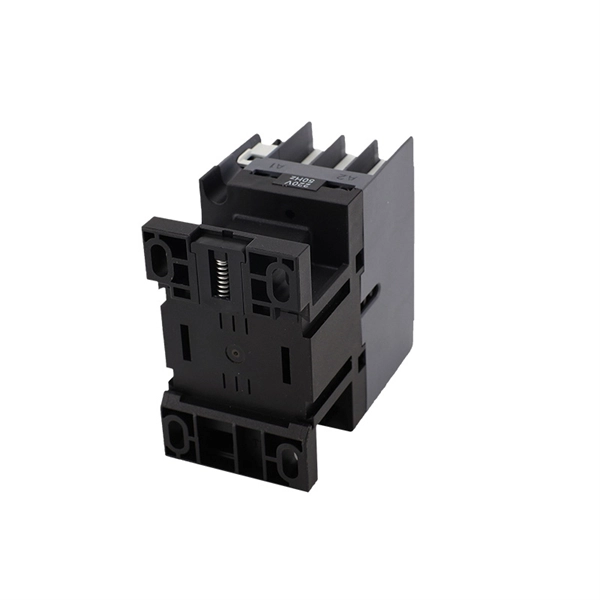
Illustrative equipment image

PROTECTIVE RELAY TESTING

A comprehensive testing program should simulate fault and normal operating conditions of the relay. Acceptance testing, commissioning, and startup will include control power tests, current transformer

Protection Testing Library (PTL)

This functionality is the technological basis of the Protection Testing Library (PTL), a comprehensive test template library for a wide range of protection relays. In

EMC Test Applications

Hence a comprehensive testing of protection relays is very important in order to keep the power system stable and working properly. EMC PARTNER offers a complete and extensive test solutions from

Protection relay testing and diagnostic solutions

Discover Megger''s protective relay test set and software solutions for all relay types and schemes across diverse grid protection needs.

Protection Relay Testing and Commissioning

Individual test programs for each type of protection relay are needed, but the interface used is standard for all protection relay types. Control of input waveforms and analogue measurements, the

Protection Relay Testing

Reliably working protection relays are key in modern energy systems. Read on to learn about best practices, challenges, and trends in protection testing.

Enhancing Reliability: Best Practices in Protection System Testing and

Function testing involves manual or electrical manipulation of components to confirm signal paths and device operation. Functional testing provides a comprehensive validation of relay operations,

Testing & Commissioning Protective Schemes

The purpose of the commissioning tests is to ensure that connections are correct, that the performance of current transformers and relays agrees with the expected results and that no

Protection Relay Types and Testing Procedures

Discover the types of protection relays, their applications, and essential testing procedures to ensure grid reliability and safety. Learn about tools like secondary injection test sets.

Protection Relay Test

From substations to industrial plants, generation, transmission, and distribution systems, Conprove provides the best technological and methodological

Protection Relay Types and Testing Procedures

Introduction In modern electrical systems, protection relays are critical for ensuring safe and efficient operations. These devices safeguard assets and maintain power stability by swiftly

The Relay Testing Handbook: Principles and Practice

This online protective relay testing seminar follows Chris Werstiuk (author of The Relay Testing Handbook) as he tests a relay from start to finish. You''ll learn the basic skills needed to test any

Power System Protective Relays: Principles & Practices

Abstract: Protective relays and devices have been developed over 100 years ago to provide “last line” of defense for the electrical systems. They are intended to quickly identify a fault and isolate it so the

Microsoft Word

1. Introduction Why do we use protective relays? Relays are frequently found device in high voltage or medium voltage power system. Their main duty is to isolate a faulty section within few cycles but by

Protection Relay Testing & Monitoring Services

Protection Relay Testing and Commissioning The testing and verification of protection devices and arrangements present several challenges. This is

Enhancing Reliability: Best Practices in Protection System Testing and

Testing verifies that protection schemes meet their intended purpose, ensuring safety and system integrity. Function testing involves manual or electrical manipulation of components to confirm signal

IEEE PSRC, WG I-25 May 10, 2017 Commissioning Testing of Protection

relays, communication devices, batteries, and protection/control circuits. It must also be created with an appreciation for factors within the working environment such as management interaction, workforce

Why relay protection testing keeps getting harder – and what you can

Explore why relay protection testing is becoming more complex with IEC 61850 systems, and discover practical steps to streamline your protection workflows.

Related Video Reference

This video was associated with the source search result. Verify technical details against current product documentation and project requirements.

Share your network requirements

Share the fiber interfaces, termination capacity, cable route and evidence required for handover.

Send a project brief