Skip to content
AK OPTICALSystems Send a project enquiry
Reference library

Fiber Optic Sensing Technology Requirements

Published
  • Fiber
  • Optic
  • Sensing
Research context

Reference summary

Selecting the most suitable fiber optic sensing technology depends on application requirements, including the spatial resolution, acquisition rate, sensing length, and environmental conditions. This IEEE-SA Industry Connections document is supplied “AS IS” and “WITH ALL FAULTS. ” Although the IEEE-SA Industry Connections activity members who have created this Work believe that the information and guidance given in this Work serve as an enhancement to users, all persons must rely upon their. It is most often used in Distributed Acoustic Sensing (DAS) for applications like seismic monitoring and downhole oil and gas exploration.

Capable of measuring both strain and temperature, Brillouin systems offer the longest sensing range among scattering techniques. These are ideal for. Fiber Bragg gratings (FBGs) have, over the last few years, been used extensively in the telecommunication industry for dense wavelength division demultiplexing, dispersion compensation, laser stabilization, and erbium amplifier gain flattening.

In addition, FBGs have been used for a wide variety of.

Jose Miguel Lopez-

Higuera: Handbook of Optical Fiber Sensing Technology, John Wiley & Sons, 2002. P 603 Radiation absorption excites an orbital electron to a higher energy level. Radiation absorption creates electronic excited states that are trapped by localized defects for extended periods of.

The Fiber Optic Sensing Association (FOSA) is dedicated to accelerating the use of distributed and quasi-distributed optical fiber sensing technologies. Fiber optic sensing works by measuring changes in the “backscattering” of light occurring in an optical fiber when the fiber encounters vibration. If 5G is the neural conduction of the digital age and AI the super brain, fiber sensing serves as the quietly growing peripheral nerves.

From reference to enquiry

Questions for your project

Use these editorial prompts alongside the linked excerpts. They identify items to confirm for your project.

Technical notes

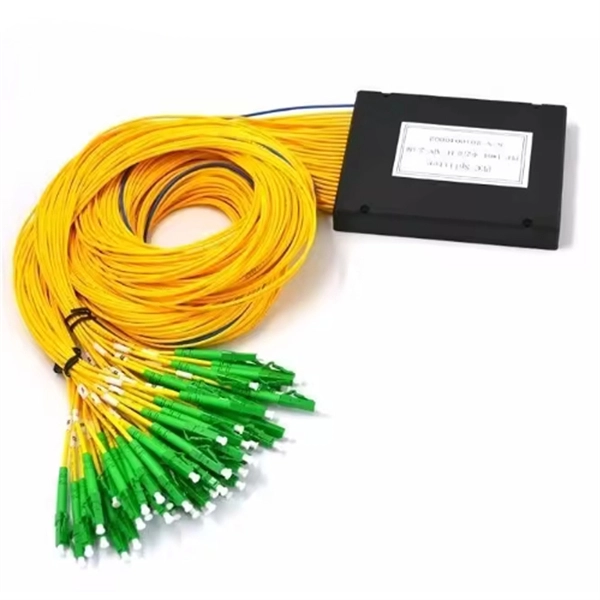
Illustrative equipment image

Fiber Optics Sensors Standards Report

This document is intended to describe technologies available, application needs, and operational requirements relating to the use of fiber optic sensing systems on aerospace platforms:

Fiber Optic Sensing Technologies

Selecting the most suitable fiber optic sensing technology depends on application requirements, including the spatial resolution, acquisition rate, sensing length, and environmental conditions.

Optical Fiber Sensors Guide

Optical fiber sensors offer attractive characteristics that make them very suitable and, in some cases, the only viable sensing solution. Some of the key attributes of fiber sensors are summarized below.

Fiber Optic Sensors: Fundamentals, Principles & Applications

Fiber serves as a continuous sensing element. Sensing is based on. { 1 + ln( / ) z + ln( / ) } Equipped with safety features and remote fault monitoring.

Fiber Optic Sensing Association (FOSA)

Fiber optic sensing works by measuring changes in the “backscattering” of light occurring in an optical fiber when the fiber encounters vibration, strain or temperature change.

Fiber Optic Sensor

Fiber optic sensors are defined as devices that utilize optical fibers to measure a variety of stimuli, including mechanical, thermal, electromagnetic, radiation, chemical, and flow characteristics.

Turning Fiber into a Sensing System: The Magic of

From energy and transportation to agriculture and cybersecurity, fiber sensing is quietly revolutionizing industries with applications once thought

Fiber-Optic Pressure Sensors: Recent Advances in

This paper conducts a systematic analysis of the sensing mechanisms in fiber-optic pressure sensors, with a particular focus on the performance optimization effects

Fiber-Optic Sensing Technologies

Fiber-optic sensors offer the same benefits that optical fibers deliver to the telecommunications industry. They are immune to EMI, nonconductive, electrically passive, low loss, high bandwidth, small,

Related Video Reference

This video was associated with the source search result. Verify technical details against current product documentation and project requirements.

Share your network requirements

Share the fiber interfaces, termination capacity, cable route and evidence required for handover.

Send a project brief