Skip to content
AK OPTICALSystems Send a project enquiry
Reference library

Fiber Optic Sensor Monitoring Solution

Published
  • Fiber
  • Optic
  • Sensor
Source context

AI source overview

Fiber optic sensors enable real-time, high-precision monitoring of temperature, strain, vibration, and environmental changes across extensive areas, transforming infrastructure, industrial, and environmental monitoring.

Overview of Fiber Optic Sensor Monitoring

Fiber optic sensors use optical fibers to detect changes in physical quantities such as temperature, strain, pressure, vibrations, and chemical concentrations. Unlike traditional electronic sensors, they are immune to electromagnetic interference, highly durable, and capable of long-distance monitoring with minimal maintenance. These sensors can be deployed as point sensors, long-gauge sensors, or distributed sensors, allowing for localized or continuous monitoring along the fiber length.

Key Technologies

Distributed Fiber Optic Sensing (DFOS): Converts a single fiber into a continuous sensor capable of monitoring temperature, strain, and vibrations over tens of kilometers. Techniques include: Distributed Temperature Sensing (DTS) using Raman scattering for precise temperature mapping. Distributed Temperature and Strain Sensing (DTSS) using Brillouin scattering to detect mechanical stress and elongation.

Distributed Acoustic Sensing (DAS) using Rayleigh backscattering to detect vibrations, footsteps, vehicles, or environmental events. Fiber Bragg Grating (FBG) Sensors: Inscribe periodic changes in the fiber core to reflect specific wavelengths. Shifts in the Bragg wavelength indicate changes in strain or temperature.

Long-

Period Grating (LPG) Sensors: Use periodic refractive index changes to couple light between core and cladding modes, sensitive to temperature, stress, or surrounding refractive index. Fabry–Perot Interferometers: Measure cavity length changes between fiber surfaces to detect strain or pressure.

Applications

Infrastructure Monitoring: Bridges, dams, and buildings can be continuously monitored for strain, load, temperature, and vibration, enabling early detection of structural issues and optimizing maintenance schedules. Examples include the Oresund Bridge and the Burj Khalifa. Pipeline and Subsea Cable Monitoring: DFOS detects leaks, ruptures, or anchor strikes in real time, reducing environmental and economic risks.

Industrial Predictive Maintenance: Fiber optic temperature sensors like Yokogawa's DTSX monitor plant equipment over long distances, identifying abnormal temperature changes to prevent fires or equipment failure. Environmental and Geophysical Monitoring: Fiber sensing can detect volcanic activity, microseismic events, or marine life movements, such as tracking silent whales via pressure waves in subsea cables. Security and Perimeter Monitoring: DFOS systems detect intrusions, vibrations, or unauthorized activity along borders, railways, and critical infrastructure.

Advantages

High precision and spatial resolution: Distributed sensing can achieve meter-level resolution over tens of kilometers. Durability and environmental resistance: Optical fibers resist chemical corrosion, electromagnetic interference, and harsh environmental conditions. Real-time monitoring: Enables proactive maintenance and rapid response to anomalies, reducing downtime and operational risks.

Multiparameter sensing: Advanced systems can simultaneously measure temperature, strain, and acoustic signals, with machine learning used to decouple cross-sensitivity effects.

Emerging Trends

Integration with AI and machine learning for improved signal interpretation and anomaly detection. Expansion into smart cities, offshore wind farms, and climate monitoring, leveraging existing fiber networks as distributed sensors. Development of compact, field-deployable systems for industrial and environmental applications, enhancing accessibility and cost-effectiveness.

Fiber optic sensor monitoring is rapidly becoming a critical tool for infrastructure safety, industrial efficiency, and environmental surveillance, offering unparalleled coverage, precision, and reliability compared to traditional sensing technologies.

Research context

Reference summary

Fiber optic monitoring LANCIER Monitoring offers modular solutions for the monitoring of both active and passive fiber optic infrastructures. Perimeters &.

From reference to enquiry

Questions for your project

Use these editorial prompts alongside the linked excerpts. They identify items to confirm for your project.

Technical notes

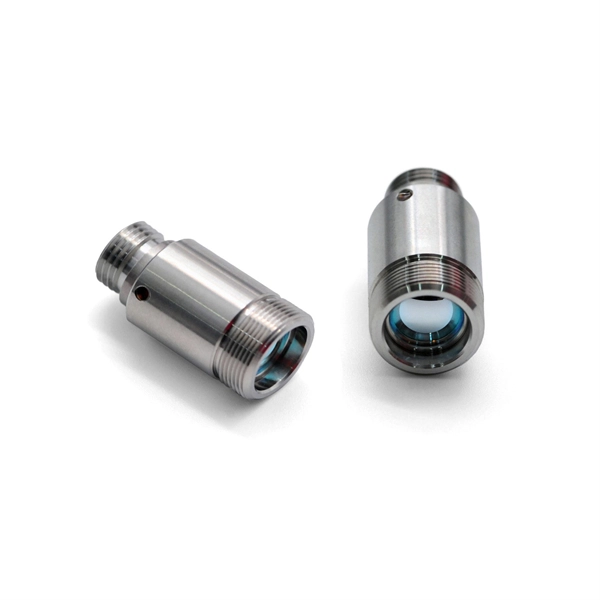
Illustrative equipment image

Fiber optic monitoring

LANCIER Monitoring offers modular solutions for the monitoring of both active and passive fiber optic infrastructures.

Perimeters & Borders Monitoring | Fiber Optic Sensing

It detects footsteps, vehicle movements, mechanical disturbances, and potential tampering activities along extensive perimeters. This fiber-based solution

Optical Fiber Sensing

The distributed optical fiber sensing system can quickly identify intrusions, accurately locate them, and report alarms using optical fibers routed in perimeter

Distributed Fiber Optic Sensing | OptaSense

OptaSense is a global leader in distributed fiber optic sensing (DFOS), providing advanced monitoring solutions that transform standard fiber optic cables into

Fiber Optic Sensing

Distributed strain sensing with a fiber optic sensor will allow a network cable owner to test the fiber at installation, and then monitor a dark fiber for excessive strain risk and changes in strain while in

Fiber Optic Sensing Solutions

HAWK''s Fiber Optic Sensing technology allows for real-time measurements of long assets such as pipelines, conveyors, and fences by monitoring changes that occur in a fiber optic cable affixed to the

Distributed Fiber Optic Sensing for Structural Health

Enhance your Structural Health Monitoring using advanced Distributed Fiber Optic Sensing Interrogators. Get real-time, high-resolution strain and temperature data

Distributed Fiber Optic Sensing Solutions | AP Sensing

Integrated solution combines fiber optic and electrical condition monitoring to help utilities detect faults earlier, optimize asset utilization and improve network

Pipeline Monitoring | Fiber Optic Leak Detection | AP

These threats, and others like landslides, can be detected fast, utilizing a standard fiber optic cable as a sensor along the pipeline. This monitoring solution provides

Optical Fiber Sensing

Abstract Nowadays, optical fiber sensing is an emerging and versatile technology thanks to continuous advances in micro/nanofabrication techniques as well as the application of new nanomaterials. Novel

Fiber optic sensing technology in underground pipeline health

However, monitoring underground pipelines is challenging due to the complex environment in which they are situated. Traditional sensors have limitations in all-round and real-time

Perimeters & Borders Monitoring | Fiber Optic Sensing Solution | AP

Event detection using AP Sensing''s fiber optic based Perimeter Intrusion Detection System (PIDS) provides high-resolution, real-time awareness of potential threats to critical perimeters and borders.

Optical Fiber-Based Structural Health Monitoring: Advancements

Structural health monitoring (SHM) plays a vital role in ensuring the safety, durability, and performance of civil infrastructure. This review delves into the significant advancements in optical

Fiber Optic Sensors: A Game Changer In Infrastructure

As we strive to build more resilient infrastructure, fiber optic sensing will undoubtedly play a crucial role in shaping a safer and more sustainable future. As you''ve

A review of railway infrastructure monitoring using fiber optic sensors

This article reviews the current state-of-the-art of fiber optic sensing/monitoring technologies, including the basic principles of various optical fiber sensors, novel sensing and

Fiber Optic Temperature Sensing and Measurement

Measure temperature with fiber optic sensors for high-resolution distributed and multipoint monitoring in batteries, processes, and harsh environments.

Enhancing Pipeline Monitoring with Fiber Optic Sensing Technology

In the ever-evolving landscape of infrastructure management, ensuring the safety and integrity of pipelines is paramount. Fiber sensing technology has emerged as a game-changer in this

Enhance Pipeline Monitoring with Fiber-Optic Sensing

This article explores how distributed fiber-optic sensing redefines pipeline safety and reliability by enabling real-time monitoring, early leak detection, and proactive maintenance.

Related Video Reference

This video was associated with the source search result. Verify technical details against current product documentation and project requirements.

Share your network requirements

Share the fiber interfaces, termination capacity, cable route and evidence required for handover.

Send a project brief