
Technical notes
Understanding Optical Modules: Working Principles, Structures, and
Explore the working principles, structures, and performance metrics of optical modules, essential components of optical fiber communication systems. Learn about key indicators such as
The Most Comprehensive Guide Of Optical Modules
Explore the ultimate guide to optical modules. Learn types, functions, performance metrics & how to choose the right module for your fiber network.
Everything You Need to Know About Optical Modules
Factors to consider when choosing optical modules include optical wavelengths, single-mode or multimode modules, data transmission rates,
Application Notes and Protocols: Ammonium Dihydrogen Phosphate
These application notes provide a comprehensive overview of the use of Ammonium Dihydrogen Phosphate (ADP), a widely utilized crystal in the field of electro-optics. Its significant linear electro
Avalanche Photo Diode
Avalanche photo diode (APD) receiver modules are widely used in fiber optic communication systems. An APD module contains the APD and a signal conditioning amplifier, but is not completely self
The need for current sensing in optical modules for 100G and beyond
In this post, I''ll discuss various current-sensing functions in high-bandwidth data communication applications for pluggable optical modules.
ADPD144RI Datasheet and Product Info | Analog Devices
The EVAL-ADPD144RIZ-EB evaluation board provides users with a simple means of evaluating the ADPD144RI, a complete photometric system designed to measure optical signals from
ADPD174GGI Datasheet and Product Info | Analog Devices
The module integrates a highly efficient photometric front end, three LEDs, and a photodiode (PD). All of these items are housed in a custom package that prevents light from going
What is PIN and APD Photodiodes in Optical Transceivers
This article explores the concept, working principles, types, differences, and applications of photodiodes, while introduce some optical module from LINK-PP that integrate PIN and APD
Installing the Cisco NCS 2000 Series Passive Optical Modules
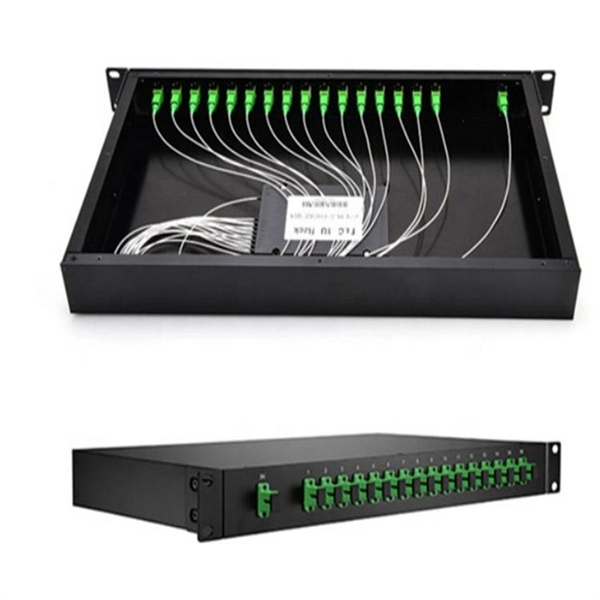
All passive optical modules, (except the mesh patch panel module), are installed using the rack mounting bracket that is one rack unit (RU) high and can be directly connected to the NCS
The Internal Components and Structure of The Optical Transceiver
In high rate optical modules, PIN or ADP diodes, and TIAs are designed to be assembled in a sealed metal housing and these constitute an optical receiver assembly. The PD converts the
TI DLP® System Design: Optical Module Specifications
ABSTRACT The objective of this application note is to help product developers better understand optical module specifications and related system design considerations. This information helps expedite
How to Choose Optical Modules Correctly?
How Optical Modules Operate Transmitter Optical Sub Assembly (TOSA) The TOSA manages light emission, converting electrical signals to optical signals. It comprises a light source,
Everything You Need to Know About Optical Modules
Optical modules are electronic devices used in communication systems to transmit optical signals. These modules convert electrical signals into optical signals, which can travel long distances
Chapter 6 PIN and APD Detectors
There are a wide variety of photodetectors that can be used for different pur-poses. In fiber optics, two types of photodetectors are of primary interest: PIN di-odes and APD diodes. Almost all practical
Nonlinear Optical Crystals in Advanced Photonics: A Comprehensive
ADP Crystals: A Deep Dive into Their Remarkable Attributes Ammonium Dihydrogen Phosphate (ADP) crystals, with their unique nonlinear optical properties, have carved a niche for themselves in the
Characterizing Optical Module Performance to Minimize the Impact on
Verification of Optical Modules Timing Performance PAM4 optical modules have significant latency (10''s of ns) as well as variation in latency nd Latency variation are very important in applications requiring
Data Center Control Solutions for Optical Systems and Modules
Analog Devices'' optical control solutions, including precision integrated controllers, converters, high-voltage convertors, linear amplifiers, and log amps enable our customer''s design of higher data rate,