Skip to content
AK OPTICALSystems Send a project enquiry
Reference library

Industrial Internet Fiber Optic Communication

Published
  • Industrial
  • Internet
  • Fiber
Source context

AI source overview

Industrial fiber optic communication enables high-speed, reliable, and interference-free data transmission in harsh industrial environments, forming the backbone of modern Industry 4.0 and IIoT systems.

Overview

Industrial fiber optic networks use light to transmit data, converting electrical signals into optical signals via lasers or LEDs, which travel through ultra-pure glass cores with minimal signal loss. At the receiving end, photodetectors convert light back into electrical signals for processing. This technology is immune to electromagnetic interference (EMI), resistant to harsh environmental conditions, and capable of supporting long-distance communication, making it ideal for industrial applications such as manufacturing, energy, mining, and transportation.

Advantages Over Copper Cabling

High bandwidth and speed: Industrial fiber can support data rates from Fast Ethernet to 100 Gbps and beyond, accommodating the growing data demands of modern production systems. Long-distance transmission: Fiber networks can span hundreds of meters to several kilometers without signal amplification, unlike copper cabling which is limited to tens of meters. Environmental resilience: Ruggedized fibers with armored or bend-insensitive designs withstand extreme temperatures, chemicals, vibration, and physical stress.

Safety and reliability: Fiber eliminates electrical connections between nodes, preventing common-mode voltage issues and enhancing safety in high-voltage environments. Role in Industry 4.0 and IIoTModern industrial environments, particularly Industry 4.0 factories, rely on real-time communication between sensors, control systems, and quality assurance devices. Fiber optic networks provide: Sub-millisecond latency, critical for high-precision manufacturing and automated processes.

Scalable bandwidth, supporting terabits per second over long distances without signal degradation. Reduced downtime and increased productivity, as demonstrated in automotive and mechanical engineering applications where fiber networks significantly decreased communication failures and improved throughput. Fiber optic networks also enable long-reach architectures, reducing the need for intermediate network nodes and simplifying network design while maintaining deterministic packet timing.

Industrial Applications

Manufacturing: Connecting sensors, robots, and control systems for real-time monitoring and automation. Energy and mining: Downhole sensing, monitoring, and secure data transmission in extreme conditions. Transportation: Reliable communication for signaling, control, and monitoring systems.

High-tech production: Semiconductor, biomanufacturing, and electric vehicle factories require fiber backbones to handle massive data flows and automation.

Future Trends

Emerging technologies such as AI-driven network management and quantum encryption are enhancing the intelligence, security, and efficiency of industrial fiber optic networks. Industrial-grade fibers with G. 657.

B3 bend-insensitive cores and armored designs are enabling 100 Gbps+ transmission with lifespans exceeding 20 years, ensuring long-term infrastructure reliability.

Conclusion

Industrial fiber optic communication is essential for modern industrial networks, providing high-speed, reliable, and interference-free data transmission. Its robustness, scalability, and compatibility with IIoT and Industry 4.0 systems make it the preferred choice for critical industrial applications, ensuring productivity, safety, and future-proof network infrastructure.

Research context

Reference summary

Optical Communications FIBER OPTICS FOR INDUSTRIAL Optical Communications FIBER OPTICS FOR INDUSTRIAL APPLICATIONS The Industrial Internet, also known as I.

From reference to enquiry

Questions for your project

Use these editorial prompts alongside the linked excerpts. They identify items to confirm for your project.

Technical notes

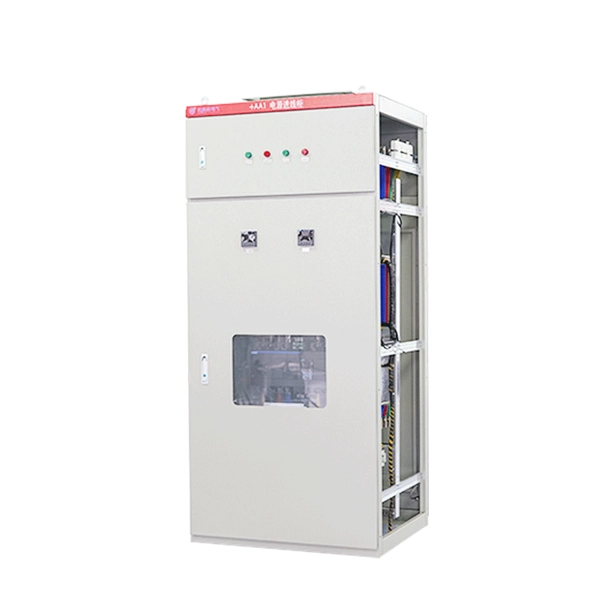
Illustrative equipment image

Optical Communications FIBER OPTICS FOR INDUSTRIAL

Optical Communications FIBER OPTICS FOR INDUSTRIAL APPLICATIONS The Industrial Internet, also known as Industry 4.0, is bringing greater speed and eficiency to industries such as factory

The Ultimate Guide to Industrial Fiber Optic Solutions in 2025

Fiber optic cables serve as the backbone of modern industrial communication, acting as “light pipes” that transmit data using pulses of light. In industrial settings, these cables convert

Fiber Optic Solutions for Industry 4.0

What distinguishes fiber optic solutions for Industry 4.0 manufacturing environments? Industrial fiber optic networks must withstand extreme environmental conditions, enable deterministic

Optical Fiber: The Future of Industrial Communications?

Fiber optics is a promising technology for the future of industrial automation. In this article, learn the history, fundamentals, and application of

Fiber Optics for Industrial Applications

Fiber optic communication solutions provide high data rates, long distances, galvanic isolation, low flammable media, and good electromagnetic compatibility (EMC). As the world''s largest fiber optic

Future-Proofing Communication: Fiber Optic Transceivers in Industrial

Industrial transceivers are essential components of industrial communication systems. They are used to transmit and receive digital or analog signals over a variety of media, including fiber

How does fiber optics work?

An easy-to-understand introduction to fiber optics (fibre optics), the different kinds of fiber optic cables, and how light travels down them.

Fiber optic technology spurs transition to PROFINET in industrial

In addition, the EMC characteristics of fiber optic cable make overall system upgrades and expansion easier, as they will not degrade or cause interference to existing working networks.

How Fiber Is Unlocking Industry 4.0 (the Fourth Industrial

The promise of Industry 4.0 is finally being realized. Learn how fiber infrastructure from Corning is essential to enabling the smart industrial revolution.

Fiber optics | Definition, Inventors, & Facts | Britannica

Fiber optics, the science of transmitting data, voice, and images by the passage of light through thin, transparent fibers. In telecommunications, fiber

Fiber in Industrial Applications

Ethernet has propagated from the traditional office environment into a wide range of areas, including harsh industrial environments like factory and building automation. Today, copper cabling is the most

Fiber optic technology spurs transition to PROFINET in industrial

Besides high data rates, a fiber optic communication link provides inherent voltage/galvanic isolation that is often desirable in industrial environments. Since fiber optic cable is

Fiber optics improve industrial controller communications

Industrial controller communications may be improved with fiber optic cables. Optical fiber cables can answer the challenges of factory automation

Revolutionizing Industries The Future of Communication

Fiber optic cables, on the other hand, transmit information using light signals through thin glass or plastic fibers, offering several advantages over their copper counterparts. One of the key

Fiber optics Industry 4.0: Industrial fiber optic networks for

From robust splice modules and precise ODF systems to specialized components for system integrators – we offer the complete range of industrial-grade fiber optic technology. Our

Industrial Infrastructure for Tomorrow E-Book | Fiber Optic

In this e-book, The Future Runs on Fiber, you''ll learn how to modernize industrial network infrastructure and build future‑ready networks that support today''s requirements and tomorrow''s innovations.

Fiber Optic Cable and Connectivity for Industrial

In industrial applications, optical fiber offers enhanced performance over more traditional copper solutions allowing for longer links, higher working temperatures, and immunity from electromagnetic

Fiber Optic Solutions Power Network Connectivity and Drive

Learn how fiber optic solutions are powering network connectivity and driving innovation in harsh industrial environments like mining and manufacturing.

Share your network requirements

Share the fiber interfaces, termination capacity, cable route and evidence required for handover.

Send a project brief