
Technical notes
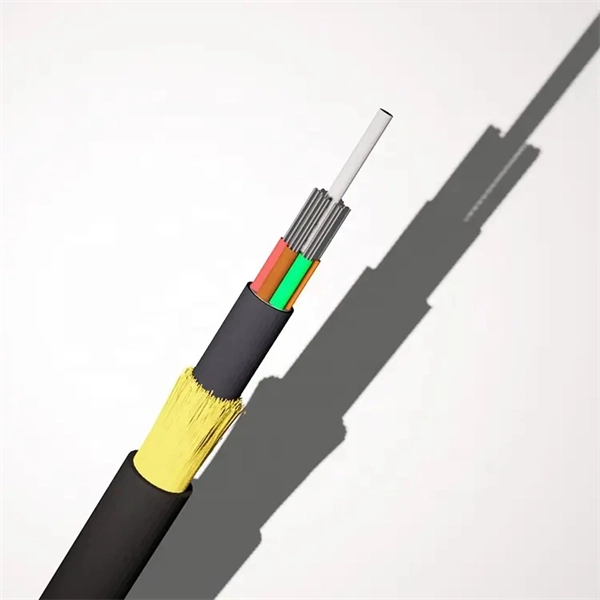
How to Convert T1 E1 to Fiber?
T1 and E1 lines have been the backbone of communication networks for years, but the demand for faster and more efficient data transfer has led to a shift towards
T1E1-Overview-Presentation
E1 Carrier Basics E1 is a digital communication link that enables the transmission of voice, data, and video signals at the rate of 2.048 million bits per second (Mbps)
Understanding the E1 Connection Diagram: A Comprehensive Guide
The coaxial or fiber optic cable serves as the physical medium for the data transfer. Overall, understanding the components and the connection diagram of an E1 connection is crucial for
E-carrier
An E1 link operates over two separate sets of wires, usually unshielded twisted pair (balanced cable) or using coaxial (unbalanced cable). A nominal 3 volt peak signal is encoded with pulses using a
What''s the Difference between E1 and T1?
E1 fiber optic modem modulates E1 signal into single mode or multimode fiber. It is suitable for transmitting additional management data
What is E1 in telecommunication?
The system of cabling in an E1 network definition is relatively simple. Allowing for many conversations to be carried over a single line, E1 lines were created to promote reliability and
RAD FOM-E1/T1 fiber modem specifications
The FOM-E1/T1 fiber optic modem converts an E1/T1 electrical signal into an optical signal. After the conversion, the signal is transmitted over fiber optic cable, extending the E1/T1 service range up to
T1 or E1 Over Fiber
This device is used extending the range of T1 or E1 physical carrier signals over fiber optic cable. This unit is capable of transporting the T1 or E1 carrier up to
T1 & E1 Lines | PDF | Digital Subscriber Line | Public
Both T1 lines and T3 lines are reserved circuits that operate over either copper or fiber optic cables. T1 and T3 are typically rented by organizations at a monthly or
What is E1,T1 Line? Difference between E1 and T1
In PDH (Plesiochronous digital hierarchy), two basic PCM communication systems are used as the basis, one is the T1 system recommended by ANSI, and the
Perle | device networking, media conversion, & IoT connectivity
Founded in 1976, Perle designs and manufactures highly reliable device networking, media conversion, and Internet of Things (IoT) connectivity hardware. Perle products establish network connectivity
Optical Fiber | Optical Fiber Products | Corning
Optical fiber broadband brings together a culture of innovation, quality, and manufacturing excellence to create life-changing products.
Fiber optics | Definition, Inventors, & Facts | Britannica
Fiber optics, the science of transmitting data, voice, and images by the passage of light through thin, transparent fibers. In telecommunications, fiber
Optical networks
An optical transport network is a high-speed communication system that sends light signals over fiber-optic cables to move large amounts of data across long
Submarine Cable Map
TeleGeography''s comprehensive and regularly updated interactive map of the world''s major submarine cable systems and landing stations.
Products
Control Cable Electronic Wire & Cable Ethernet Cable Fiber Optic Cable Fieldbus Cable Flex Cable Instrumentation Cable
How to Convert T1 E1 to Fiber?
Additionally, ensure that the fiber optic cables are properly terminated and that you have the necessary knowledge or assistance for working with fiber optic
T1/E1 Modems & Media Converters
Modems & Media Converters T1/E1 Send T1/E1 data over Fiber Convert analog T1 or E1 signals to digital fiber optic signal or T3/E3 connectivity applications up to distances of 100km. If you can''t find a
Related Video Reference
This video was associated with the source search result. Verify technical details against current product documentation and project requirements.