
Technical notes
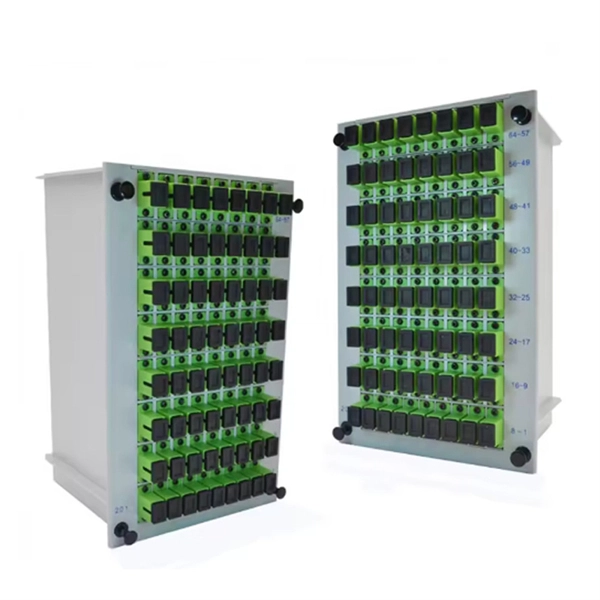
G.652.D vs G.657: Fiber Selection Guide for PON ODN
Learn the differences between G.652.D and G.657 fibers and how PON ODN environments affect fiber selection. A practical guide for GPON and FTTH deployment.
Recommendation ITU-T G.652 (08/2024)
The ITU-T G.652 fibre was originally optimized for use in the 1310 nm wavelength region but can also be used in the 1550 nm region. This is the latest revision of a Recommendation that was
What Is G.652 Fiber? G.652 vs G.652.D, G.652 vs G.655
G.657 fiber is designed to be compatible with G.652 fiber but is less bend-sensitive, which means it produces lower levels of attenuation due to bends. G.657 fiber is split into two parts:
ITU-T Rec. G.652 (11/2009) Characteristics of a single-mode optical
This Recommendation describes a single-mode optical fibre and cable which has zero-dispersion wavelength around 1310 nm and which is optimized for use in the 1310 nm wavelength region, and
Characteristics of G.652 Optical Fiber
When revising the G.652 optical fiber standard, it is hoped that the characteristics of the G.652 optical fiber will be comprehensively improved. At least 10Gbit/s long-distance applications
Differences Between G.652, G.655, and G.657 Fiber Types
Understanding the structural and optical differences between these fibers helps you select the right cable for PON, DWDM, backbone, or last-mile deployments.
G.652 Fiber: Differences and Applications of Each Subcategory
Although G.652D optical fiber is a full-wave optical fiber, it seems that there is not much need to use so many bands for optical communication. For example, the current DWDM mainly
Single-Mode Fiber Cable Guide: Types, Specs & Selection
Introduction Fiber optic cables are the backbone of modern telecommunications infrastructure, enabling high-speed data transmission across vast distances with minimal signal loss.
G657 vs G652 Optical Fibers: Key
Learn the critical differences between G657 (bending-insensitive) and G652 (traditional single-mode) optical fibers—bend radius, attenuation, uses in FTTH/MANs, and how to choose the
G.652 vs G.655 Single Mode Fiber Comparison
How to Make a Proper Selection Between G.652 and G.655 SMF Cables? G.652 standard is designed for LAN, MAN, access networks and CWDM transmission. CWDM is an economically
G.652 Fiber: Differences and Applications of Each
G.652 fiber is the earliest type of single-mode optical fiber used and is currently the most widely used optical fiber in communication networks. Whether
Single Mode Fiber Type: G652 vs G655 Fiber
Single Mode Fiber Type: G652 vs G655 Fiber With the increasing demand for greater capacity over long distance transmission, single mode fiber
Single Mode Fiber: G652D vs G657A1 vs G657A2
This post provides a introduction to single mode fiber, mainly introduces G652D, G657A1, and G657A2, their features, and FAQs.
G652 and G655 Single mode Fiber Optics guide
There are two primary sources of the specification of single-mode optical fiber. One is the ITU-T G.65x series, and the other is IEC 60793-2-50. In this case, we are going to stablish the
ITU-T Rec. G.652 (11/2009) Characteristics of a single-mode optical
Characteristics of a single-mode optical fibre and cable Summary Recommendation ITU-T G.652 describes the geometrical, mechanical and transmission attributes of a single-mode optical fibre and
GPON Explained: What Is Gigabit Passive Optical Network?
What is GPON? GPON stands for Gigabit Passive Optical Network, a widely used fiber-access technology under the Passive Optical Network (PON) family. Unlike traditional copper-based
A Guide to Cable for GPON Fiber Optic Systems
Fiber optic cables revolutionized internet service by allowing internet service providers to provide much faster upload and download speeds and higher bandwidth. Traditional phone lines and
Differences Between G.652, G.655, and G.657 Fiber
Technical comparison of G.652, G.655 and G.657 fibers including refractive profiles, bending performance, dispersion, and application use cases.