
Technical notes
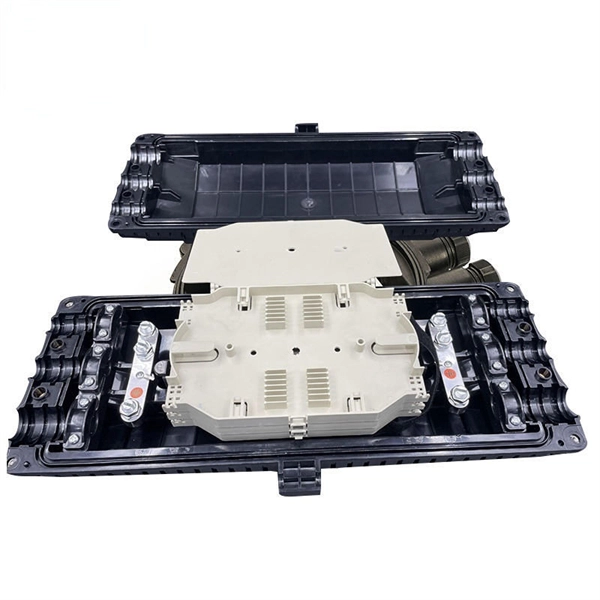
Optical Repeater vs. Optical Amplifier: Key Differences
Explore the distinctions between optical repeaters and amplifiers in fiber optic communication. Understand how each handles signal attenuation and noise.
Under The Sea: Optical Repeaters For Submarine Cables
Submarine repeaters get their power over a dedicated copper sheath wrapped around the glass fibers at the center of the cable, with a return path
Lecture 8: Intro to Optical Amplifiers
Substituting this equation into the power evolution equations and integrating over the length of fiber, the gain can be computed by taking the ratio of output to input power
Hybrid optical amplification units in passive optical access
This paper highlighted the hybrid optical amplification units in passive optical access communication networks for the maximization of long fiber reach and average repeater spacing.
Fiber Optic Amplifiers and Repeaters
By boosting the optical signals, fiber optic amplifiers amplify the weak signals and ensure their efficient transmission over long distances. Similarly,
Repeater Amplifier GPON | 2 PON OLT Extender
GPON repeater amplifier is an optical transmission equipment which magnify and reshape signals during optical transmission process.
Optical amplifiers and repeaters
Okay, let''s break down optical amplifiers and repeaters in the context of fiber optic communication. They''re both crucial for long-distance data transmission, but they work in different ways and have
When to Use an Optical Amplifier vs a Repeater
In this post, we''ll break down the critical differences between optical booster amplifier and optical repeaters, helping you understand when to choose
How Do Optical Repeaters Work?
Optical fiber repeaters are used to amplify the signal to overcome this attenuation. These devices detect the optical signals in the network and then re
Fiber Optic Amplifiers and Repeaters Explained
Learn how fiber optic amplifiers and repeaters work and how they extend the reach of fiber optic networks in this article.
Optical Amplifiers for Access and Passive Optical
For many years, passive optical networks (PONs) have received a considerable amount of attention regarding their potential for providing
Chapter 5. Repeaters and Optical Amplifiers
Optical repeaters are used to retime, reshape, and regenerate an optical signal, providing even longer distances than optical amplifiers used alone.
Basics of Optical Amplifiers | Springer Nature Link
Traditionally, when setting up an optical link, one formulates a power budget and adds repeaters when the path loss exceeds the available power margin. To amplify an optical signal with a
Fiber Optical Amplifiers and Repeaters
Though repeaters can extend transmission distances, they are costly, complex, and prone to failure. Repeaters need to be monitored continuously that adds cost to the network owner. A much simpler
Optically Amplified System
The optical amplifier provides a method of increasing the optical output power from an end-terminal system by more than 10 dB. In addition, the optical amplifier can be used in a repeater configuration.
Repeater Power Conversion Efficiency in Submarine Optical
In power-limited trans-oceanic submarine systems, the electrical-to-optical (E/O) power conversion efficiency determines the amount of optical signal power generated by repeaters, which
When to Use an Optical Amplifier vs a Repeater
Optical amplifier is ideal for Long-Distance Transmission minimal regradation. Optical repeater is ideal solution for signal regeneration.
What are the Essential Components and Applications of a Fiber Optic
Power Supply: Beyond simply providing power, the power supply within a fiber optic repeater needs stringent regulation and redundancy measures to maintain stable operation and prevent signal
Related Video Reference
This video was associated with the source search result. Verify technical details against current product documentation and project requirements.