
Optically Multiplexed Systems Wavelength Division Multiplexing
Search optical fiber, connectivity, cable management and network infrastructure references.
- Optically
- Multiplexed
- Systems
Articles and technical references
10 on this page-
Current Wavelength Division Multiplexing Systems
Normal WDM (sometimes called BWDM) uses the two normal wavelengths 1310 and 1550 nm on one fiber. Dense WDM (DWDM) uses the C-Band (1530 nm-1565 nm) transmission window but with denser. In fiber-optic communications, wavelength-division multiplexing (WDM) is a technology...
-
Introduction to Dense Wavelength Division Multiplexing Systems
Dense wavelength-division multiplexing (DWDM) refers originally to optical signals multiplexed within the 1550 nm band so as to leverage the capabilities (and cost) of EDFAs, which are effective for wavelengths between approximately 1525–1565 nm (), or 1570–1610 nm (). EDFAs...
[PDF Version]
-
G653 is not suitable for dense wavelength division multiplexing
G653 dispersion is 0 at 1550nm, not suitable for WDM system. Since the Dispersion compensation technology are improved for. In fiber-optic communications, wavelength-division multiplexing (WDM) is a technology which multiplexes a number of optical carrier signals onto a...
-
Huijue Wavelength Division Multiplexing
In fiber-optic communications, wavelength-division multiplexing (WDM) is a technology which multiplexes a number of optical carrier signals onto a single optical fiber by using different wavelengths (i.e., colors) of laser light. This technique enables bidirectional...
[PDF Version]
-
Advantages of Wavelength Division Multiplexing Reduced Power
CWDM Advantages: · Cost-Effectiveness: Lower upfront costs for hardware and installation. The problem arises when the demand for bandwidth in a fiber optic network exceeds the current capacity, WDM helps in expanding the capacity of a fiber optic network without requiring...
[PDF Version]
-

Fiber optic convergence wavelength division multiplexing
Wavelength division multiplexing (WDM) is a technology for increasing the transmission capacity of optical fiber communications by sending multiple data channels simultaneously through a single fiber, each on a different wavelength of light. This technique enables...
-
Wavelength Division Multiplexing Conversion Disk
Each wavelength-converting transponder receives an optical data signal from the client layer, such as SONET/SDH or another type of data signal, converts this signal into the electrical domain, and re-transmits the signal at a specific wavelength using a 1,550 nm band...
[PDF Version]
-
Why do 100G optical modules use wavelength division multiplexing
Both utilize wavelength division multiplexing technology to combine multiple optical signals of different wavelengths onto a single optical fiber, thereby increasing fiber capacity and transmission distance. This technique enables bidirectional communications over a. Based on...
[PDF Version]
-
Monitoring methods for wavelength division multiplexing
WDM systems are divided into three different wavelength patterns: normal (WDM), coarse (CWDM) and dense (DWDM). Normal WDM (sometimes called BWDM) uses the two normal wavelengths 1310 and 1550 nm on one fiber. Coarse WDM provides up to 16 channels across multiple transmission...
[PDF Version]
-
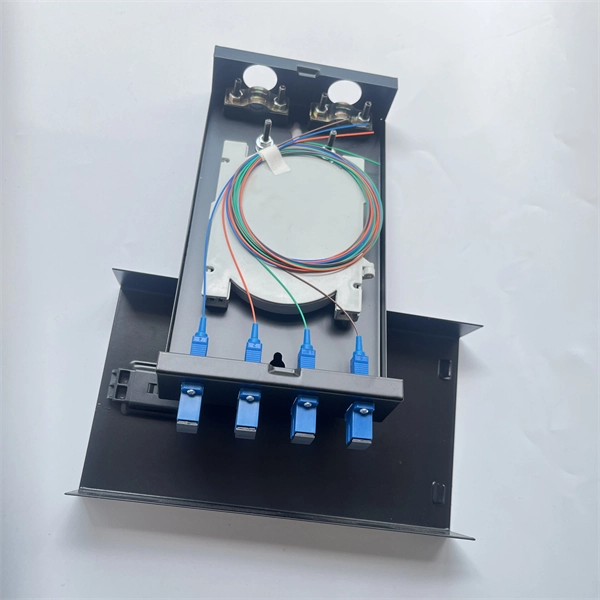
Wavelength Division Multiplexing Sublayer
WDM systems are divided into three different wavelength patterns: normal (WDM), coarse (CWDM) and dense (DWDM). Normal WDM (sometimes called BWDM) uses the two normal wavelengths 1310 and 1550 nm on one fiber. Coarse WDM provides up to 16 channels across multiple transmission...
[PDF Version]