
Technical notes
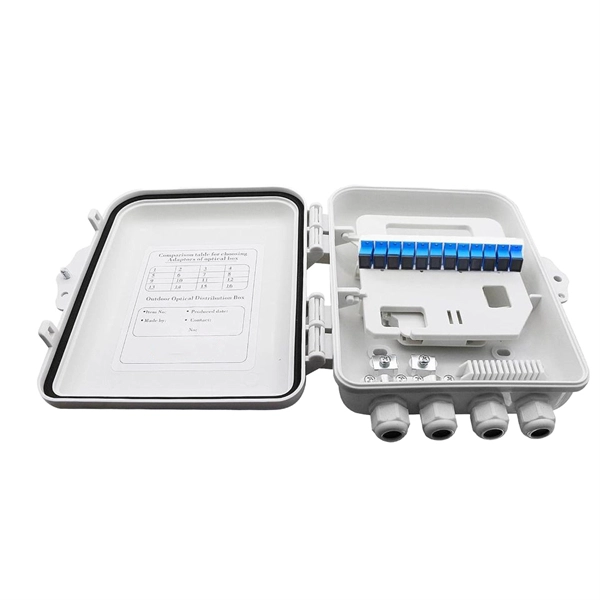
Passive Optical Device
This chapter deals with various measurement and characterization techniques of fundamental optical devices such as semiconductor lasers, optical receivers, optical amplifiers, and various passive
Progress in Passive Silicon Photonic Devices: A Review
Passive optical components are devices that perform their function without requiring external power or active control. They are the fundamental pipes of a PIC, responsible for
Effective resolution enhancement of a passive optical phased array
Passive optical phased arrays (OPAs) based on the arrayed waveguide grating (AWG) principle enable beam steering without electrical phase shifters and are therefore attractive for low
Passive optical network
Passive optical network A fiber optic cable assembly with SC APC connectors, as commonly used to link optical network terminals to passive optical networks A
What is Optical Passive Device? Uses, How It Works & Top
What is an Optical Passive Device? At its core, an optical passive device is a component that manipulates light signals within fiber optic systems without requiring electrical power.
Dual-Axis Beam-Steering OPA with purely Passive Phase Shifters
We present a multi-layer optical phased array (OPA) with non-uniform pitch sizes between arrays in each layer and a uniform arrangement between layers, designed for dual-axis
What Are Passive Optical Components and How Do They Work?
Passive optical components play a fundamental role within this infrastructure. These engineered devices manage and direct light signals through a network without requiring an external
Active Alignment vs Passive Photonics Alignment Techniques
Passive alignment relies on predetermined features implemented with extraordinary precision during the subcomponent fabrication process enabling Lego-like assembly of subcomponents, while active
Two-Dimensional Beam Scanning of Passive Optical Phased Array
In this paper, we propose two passive OPA chips based on silicon nitride delay lines, which can achieve two-dimensional scanning only by wavelength tuning. The two passive OPA chips have different
Active optical phased array integrated within a micro-cantilever
Integrated optical phased arrays fabricated on silicon wafers are a potential solution, but demonstrated devices with system-level performance currently rely on expensive widely tunable
Passive Optical Devices | Springer Nature Link
In the present chapter we discuss the following passive optical devices that are of great importance in integrated optic sensors :...
Active Alignment vs Passive Photonics Alignment Techniques
In optics and photonics, array alignment involves the precise positioning of optical fibers or collimators to couple light with photonic chips (often referred to as photonic integrated circuits or PICs),
Photonics Array Alignment: Precision Active and Passive Techniques
This is especially true for optical modules, elements, and devices that must be aligned precisely to achieve rated performance and production yield. In advanced applications such as
A Large-Scale Passive Optical Phase Array With 1024 Channels
The effective aperture of optical phased array determines properties such as divergence angles and ranging distance, and how to achieve it has been of interest to researchers. In this letter, we have
Passive AWG-assisted Optical Phased Array for High-Resolution 2D
A high-resolution 65-channel arrayed-waveguide-grating-assisted passive optical phased array is reported based on an ultra-low loss silicon nitride platform. Two-dimensional (2D) beam steering
Dual-axis beam-steering optical–phased array with purely passive
PDF | On Jun 17, 2025, Venus Kakdarvishi and others published Dual-axis beam-steering optical–phased array with purely passive phase shifters | Find, read and cite all the research you
Two-Dimensional Beam Scanning of Passive Optical Phased Array
Optical phased array has become a potentially critical component for beam scanner benefiting from its advantages in cost, mass production, integration, stability and scanning rate. However, the
Dual-axis beam-steering optical–phased array with purely passive
We present a multilayer optical-phased array (OPA) on a silicon-on-insulator (SOI) platform for dual-axis beam steering via wavelength tuning. By eliminating grating couplers, the
Related Video Reference
This video was associated with the source search result. Verify technical details against current product documentation and project requirements.