
Technical notes
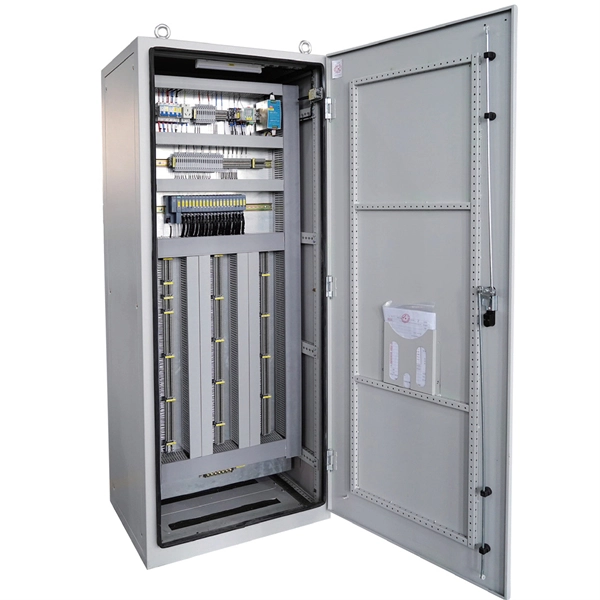
Protective Relays: Types, Working Principle & Uses
When the relay determines that a condition exceeds its settings or logic requirements, it sends an output signal to trip a circuit breaker, alarm an
Relay Switch Circuit and Types of Relay Switching Circuits
PDF file
SCHEMATIC REPRESENTATION OF POWER SYSTEM RELAYING
presentation of protection and control relaying. The report will identify methodology behind these practices, present issues raised by the integration of microprocessor relays and the
Basic protection relay knowledge
A fast and selective arc fault mitigation for air-insulated LV & MV switchgear and Relion protection and control relays and sensor technology protect staff and plant facilities for many years.
Power System Protective Relays: Principles & Practices
Protective relays and devices have been developed over 100 years ago to provide “lastline”of defense for the electrical systems. They are intended to quickly identify a fault and isolate it so the balance of
Protective Relay: Working, Types, and Applications
Learn about protective relays, their working principle, types, and applications in power systems. Discover how relays protect transformers,
Relay outputs [Unipi technology Knowledge Base]
The relay outputs are located on the terminals marked with the schematic mark of the switch, they are used to switch two-state devices and can switch AC or DC
Practical handbook for relay protection engineers | EEP
Also principles of various protective relays and schemes including special protection schemes like differential, restricted, directional and distance
Types of Electrical Relays: Guide to EMR, SSR, Reed
This guide explains the main categories—from basic electromechanical relays to modern solid-state and protective types—so you can
Protective Relays: Types, Working Principle & Uses
Protective relays do not normally interrupt current directly. They receive measurements from instrument transformers, decide whether a fault
Protective Relay : Working, Types, Circuit & Its
Protective Relay : Working, Types, Circuit & Its Applications An electrically operated switch like a relay plays a key role in controlling an electrical circuit through an
Protection Relay : Circuit, Working, Types, Codes & Its
Protection Relay : Working, Circuit, Types, Codes, Functions & Its Applications November 1, 2023 By Wat Electrical A relay is a four-terminal
Output Switching Functions of Solid-State Relays
Output Switching Functions of Solid-State Relays Arguably, the technical aspect of a solid state relay we discuss most frequently with design engineers and technicians is the manner in which AC output
Relay control and protection guides
Protection Relays The relay is a well known and widely used component. Applications range from classic panel built control systems to
Relays Part 4: The Protective Relay Basic Theory
The types of protective relays that exist are overcurrent, electromechanical, directional, distance, pilot, and differential relays. The circuit diagram of the protective relay is made up of current
How Electrical Relays Work
A relay is an electromagnetic switch that opens and closes circuits electromechanically or electronically. A relatively small electric current that can
Understanding Protective Relays in Power Systems
Protective relays are vital for safeguarding power systems, ensuring protection against faults and abnormalities. This post explores key relay
Basics of Solid-State Relays
ABSTRACT Solid-state relays are switches with no moving parts that control loads with signals provided by an external device, such as an MCU. High voltage systems, like a high-voltage
Your Personal PLC Tutor Site
Enough said. Let''s see how we can use these outputs in the "real plc world". Shown above is a typical method of connecting our outputs to the plc relays. Although
Related Video Reference
This video was associated with the source search result. Verify technical details against current product documentation and project requirements.