Skip to content
AK OPTICALSystems Send a project enquiry
Reference library

Secondary Distribution Box Facilities

Published
  • Secondary
  • Distribution
  • Box
Source context

AI source overview

Secondary distribution box facilities deliver low-voltage electricity from distribution transformers to end-users, ensuring safe, reliable, and localized power distribution.

Overview of Secondary Distribution

Secondary distribution systems operate at low voltage levels, typically below 1 kV, and are responsible for delivering electricity from medium-voltage (MV) or low-voltage (LV) transformers to residential, commercial, and small industrial consumers ( ). These systems are the final stage in the electrical distribution network, converting high-voltage power from primary feeders into usable voltage for end-users ( ).

Components of Secondary Distribution Box Facilities

A typical secondary distribution box or unit substation includes: Enclosed primary high-voltage equipment: Connects to the primary distribution network. Three-phase power transformers: Step down voltage from medium to low levels suitable for end-use. Enclosed secondary low-voltage switchgear: Distributes power to multiple circuits and provides protection through breakers and fuses ( ).

Busbars or busways: Facilitate organized distribution of electricity within the facility. Protection devices: Circuit breakers, relays, and fuses safeguard against overloads and faults ( ).

Configurations and Layouts

Secondary distribution boxes can be configured in several ways to enhance reliability and minimize outage duration: Simple Radial: Single incoming feeder supplying all loads; simple but less reliable. Primary Selective Radial: Adds a second primary incoming circuit to limit outage duration in case of cable failure. Secondary Selective: Two electrically independent unit substations with bus tie breakers, allowing service restoration within seconds if one bus fails.

Loop Selective: Substations connected in a loop from two sources, providing redundancy and continuous service ( ).

Design Considerations

Proximity to load centers: Locating transformers and secondary switchboards close to areas of high demand reduces cable lengths and voltage drops ( ). Transformer type: Liquid-filled transformers with advanced insulation (e.g., Envirotemp FR3) can extend service life and reduce footprint. Voltage and capacity ratings: Must match the expected load and comply with local standards.

Safety and reliability: Incorporates protective devices and redundancy to ensure continuous power supply ( ).

Applications

Secondary distribution box facilities are widely used in: Residential areas: Delivering power to homes via service drops or secondary mains. Commercial buildings: Supplying offices, retail spaces, and small industries. Urban infrastructure: Supporting localized delivery and enhancing grid reliability.

Automotive and industrial applications: Powering electronic control units and machinery with low-voltage distribution ( ).

Benefits

Localized power delivery reduces line losses and voltage drops. Enhanced reliability through selective and looped configurations. Safety via low-voltage operation and protective devices.

Flexibility for future expansion or integration with renewable energy sources ( ). In summary, secondary distribution box facilities are critical for converting and distributing electricity safely and efficiently to end-users, with designs tailored to load density, reliability requirements, and local infrastructure constraints.

Research context

Reference summary

Secondary unit substations design guide secondary unit substation is a close-coupled assembly consisting of enclosed primary high voltage equipment, three.

From reference to enquiry

Questions for your project

Use these editorial prompts alongside the linked excerpts. They identify items to confirm for your project.

Technical notes

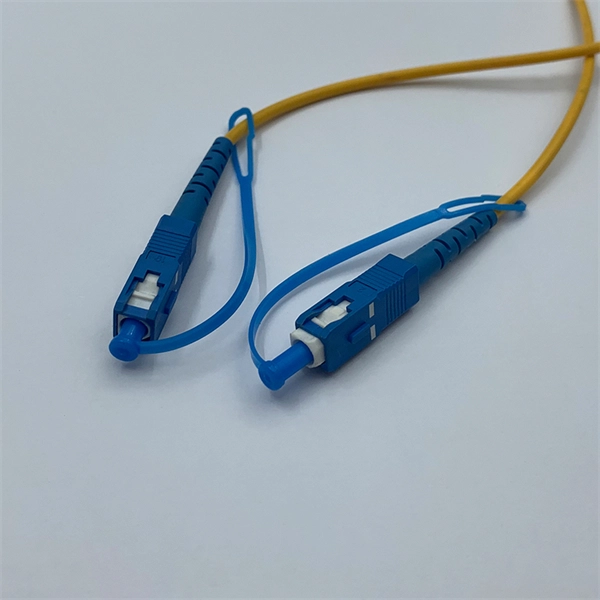
Illustrative equipment image

Secondary unit substations design guide

secondary unit substation is a close-coupled assembly consisting of enclosed primary high voltage equipment, three-phase power transformers, and enclosed secondary low voltage equipment.

The Primary and Secondary distribution in electrical systems

Understanding the fundamental distinction between Primary and Secondary distribution in electrical systems is pivotal for designing efficient and reliable electrical distribution systems tailored

Secondary Distribution Boxes

Improve cable management, enhance flexibility, reduce installation costs and show dramatic cost savings throughout the life-cycle due to adds, moves and changes in new construction and

Electric power distribution

Commercial and residential customers are connected to the secondary distribution lines through service drops. Customers demanding a much larger amount of power may be connected directly to the

Primary vs. Secondary Distribution: What Are The Key Differences

Understand the critical distinctions between primary (11kV-33kV) and secondary (400V-1kV) distribution systems, including equipment, protection schemes, and application scenarios.

Ultimate Guide To Distribution Boxes Db Boxes Types

This ultimate guide explains what a distribution box does, its internal components, common types, real-world applications, and how to select the right DB Box for

Secondary LV/MV distribution substations in a nutshell

The installation comprises secondary distribution substation at the point of entry, with MV cables to supply subsidiary substations located near load

The Meaning and Function of Primary, Secondary, and Tertiary

Secondary: Intermediate panel, routes power to buildings or zones. Tertiary: Final distribution point for equipment or household use. This structure ensures effective power management, safety, and

Secondary Distribution Boxes

For building owners, architects, construction managers, facilities engineers, and network administrators alike, ACS modular zone distribution systems are the intelligent choice. choice. The ACS Intelligent

Complete Guide For Distribution Boxes Types

These boxes house various circuit breakers, protective devices, and sometimes meters, which collectively manage and distribute electricity to different circuits within a facility. The correct choice

Secondary distribution system solution

CHINT provide one-stop Secondary Distribution System Solution solutions. From consulting services to engineering design and construction, to long-term project

The Ultimate Guide to Distribution Box Types

Discover the key types of distribution boxes with NUOMAK''s comprehensive guide. Learn about Main Distribution Boards (MDB), Consumer Units, Transfer Switches, and more to choose the perfect

Electric power distribution

A 50 kVA pole-mounted distribution transformer Electric power distribution is the final stage in the delivery of electricity. Electricity is carried from the transmission system to individual consumers.

Power Distribution Boxes Explained Simply

Learn what a power distribution box is, how it works, key components, types, and why it''s vital for safe and efficient electrical systems.

Panelboard fundamentals | load center vs. panelboard

What is a load center? A load center (i.e., breaker box, fuse box) takes electricity from the utility source and distributes it throughout a facility to support reliable

Understanding Primary, Secondary, and Tertiary Distribution Boxes

Learn about primary, secondary, and tertiary distribution boxes, their roles in electrical systems, and how they manage power distribution efficiently for various applications.

Understanding Distribution Boxes: Your Guide to Power

What are Distribution Boxes and Their Importance? What are Distribution Boxes and Their Importance? Distribution boxes, or electrical

The Meaning and Function of Primary, Secondary, and Tertiary

The terms primary, secondary, and tertiary distribution boxes are relative. Let''s make an example for clarity: A newly constructed residential area introduces a 10kV power line to a substation. From the

Share your network requirements

Share the fiber interfaces, termination capacity, cable route and evidence required for handover.

Send a project brief