
Technical notes
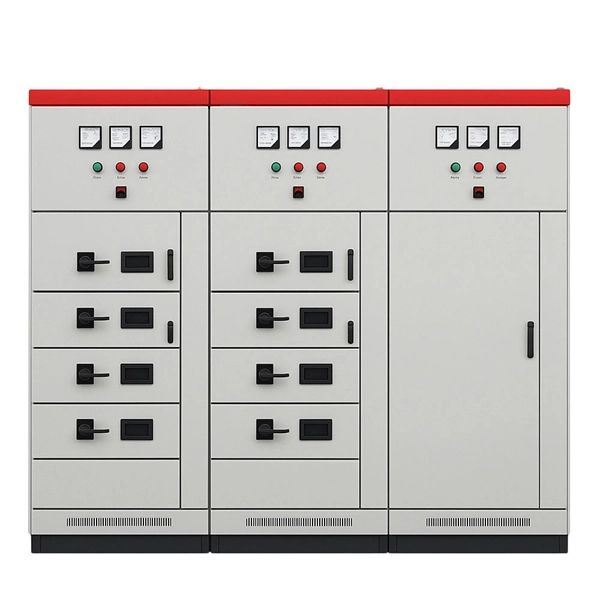
Busbar Design in Switchgear: Key Principles & Best Practices
Busbar design in switchgear ensures safe, reliable power distribution by balancing current capacity, thermal performance, mechanical strength, insulation, and standards compliance.
Typ 8DA10 und 8DB10 bis 40,5 kV und 8DAB 24 blue GIS bis 24
Medium-voltage switchgear 8DA/B is indoor, factory-assembled, type-tested, single-pole metal-enclosed, gas-insulated switchgear, for single-busbar and double-busbar applications, as well as for
Switchgear 3D eCatalogue | ABB
The well-established medium-voltage switchgear offers the high safety for personnel, enhanced switchgear reliability, and smart monitoring & diagnostic solution.
Busbar Design Standards for MV Switchgear
The design standards for MV switchgear busbars are based on a comprehensive, multi-dimensional system, primarily
8DA10 and 8DB10 switchgears
Siemens 8DA10 single-bus and 8DB10 double-bus switchgear are arc-resistant, gas-insulated, medium-voltage solutions. Use these designs in limited spaces, harsh environments, and to lower your total
EMS | ⚡️ Individual Busbars for Switchgear
Special busbar systems for all electrical connections in switchgear, control cabinets and low-voltage systems.
8DA10 and 8DB10 Presentation 2011.10 EN
No disconnecting of the busbar while outgoing feeder will be repaired or replaced. Extension 8DB10 without shutdown of the busbar. The term major failures and minor failures are taken from the CIGRE
A Guide to Electrical Busbars: Common Uses & Design
Get answers for advantages and common uses for electric busbars, types of busbars, and how simulation tools complement the design process.
ABB MV Switchgear – Single Busbar Or Double Busbar?
Most switchgear installations used in industry with normal service conditions are based on single busbar arrangements. Compared to double busbar
Medium voltage switchgear application & selection guide
MV switchgear busbars If the switching principle has not yet been defined during network planning or in accordance with operator specifications, some general aspects should be taken into
Single busbar systems up to 5000 A
The permissible rated busbar current of the proven switchgear type ZX2 is increased by parallel connec-tion of the two busbar systems. The two physical busbar systems are com-bined electrically into a
MEDIUM VOLTAGE SWITCHGEAR
alfa-12 Switchgear are withdrawable, air-insulated, tested for resistance to internal arc faults IAC AFLR in cable, busbar and CB compartments and are metal enclosed within a fourfold compartment. Our
Circuit configurations (single line diagrams) for HV and
Circuit configurations The circuit configurations for high- and medium-voltage switchgear installations are governed by operational considerations.
Thermal Model for Copper Busbar and Electrical Connections for
The busbars physical arrangement plays an important role in this process since it can affect the efficiency and paths of heat exchange. Thus, in order to obtain a thermal model, it is first
Switchgear
A switchgear assembly has two types of components: Power-conducting components, such as switches, circuit breakers, fuses, and lightning arrestors,
Design and Installation of Medium Voltage Switchgear (Facts You
When specifying and planning medium voltage switchgear for a substation, functions and influencing factors must be matched and an economically efficient solution must be found among the
Numerical study on temperature rise and structure optimization for a
In order to study the impact of contact resistance on temperature rise of three-phase GIS busbar conductor, Wu et al. developed a finite element model of three-dimensional GIS busbar,
Electrical Busbar Electrothermal Simulation | EMWorks
Simulate DC busbar heating, current density, and temperature rise for safe, efficient power distribution and reliable switchgear design with EMWorks.
Related Video Reference
This video was associated with the source search result. Verify technical details against current product documentation and project requirements.