
Technical notes
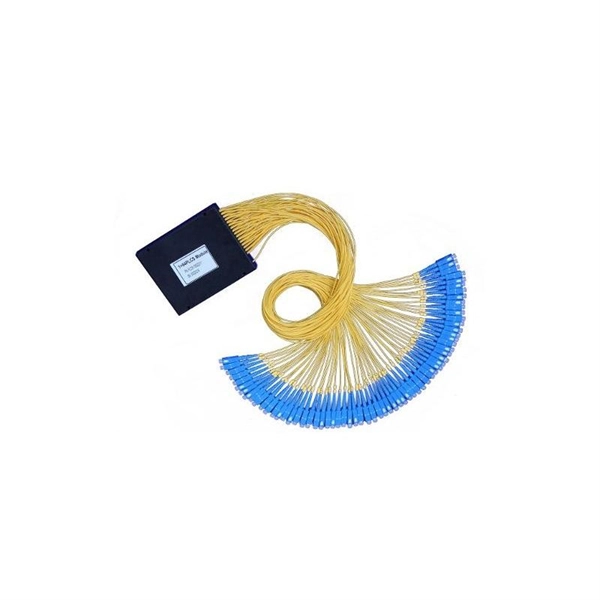
6 Core Single Mode Fiber Optic Cable Buying Guide
B2B guide to 6 core single mode fiber optic cable, covering customer pain points, product parameters, application fit, quality checks, customization,
Recommendation ITU-T G.652 (08/2024)
This document outlines the specifications for a single-mode optical fiber and cable designed for use around the 1310 nm zero-dispersion wavelength, suitable for both the 1310 nm and 1550 nm regions,
Single-Mode Fiber Cable Guide: Types, Specs & Selection
This comprehensive guide explores Single-Mode Fiber Optic Cable, covering technical specifications, deployment scenarios, and best practices to help you optimize your fiber infrastructure
Recommendation ITU-T G.652 (08/2024)
This Recommendation describes a single-mode optical fibre and cable which has zero-dispersion wavelength around 1310 nm and can be used in the 1310 nm and 1550 nm regions.
Standard for Installing and Testing Fiber Optics
Ensure that all components and parts have been received, match quantities ordered (e.g. fiber optic cable contains the number and type of fiber ordered and is the length ordered), and that any
Handbook – Optical fibres, cables and systems
In order to specify the characteristics of optical fibres and systems operating with optical amplifiers and the WDM technique, many new Recommendations were developed in ITU-T. Recommendation ITU
Fiber Optic Cable Types – Multimode and Single Mode
The Optical Core – a glass tube (core) propagates the light signals through the fiber cable. Glass is inherently reflective and is a perfect medium for transporting light. Because of this, fiber optic cables
Key Specifications of Single-Mode Fiber Optic Cables
Core Characteristics of Single-Mode Fiber Single-mode fiber optic cables typically feature a core diameter of approximately 9µm, designed for long-distance transmission with high bandwidth.
6 Core Single Mode Fiber Optical Cable
The 6 Core Single Mode Fiber Optical Cable is engineered for high-performance telecommunications and networking applications, offering exceptional data
SINGLE-MODE OPTICAL FIBER IN LOOSE TUBE AND RIBBON
1.2 Each optical fiber shall be sufficiently free of surface imperfections and inclusions to meet the optical, mechanical, and environmental requirements of this specification. 1.3 Each optical fiber shall consist
What are the key specifications of... | AIMIFIBER
What are the characteristics of single mode fiber optic cable? I often meet project managers who ask about single-mode fiber characteristics. They want clear, simple facts. They want
Fiber Optic Cable Types Explained
Our comprehensive guide to types of fiber optic cables. Learn all about the differences between single mode and multimode cables, as well as the various fiber wavelengths and standard core sizes used
ITU-T Rec. G.652 (11/2009) Characteristics of a single-mode optical
Characteristics of a single-mode optical fibre and cable Summary Recommendation ITU-T G.652 describes the geometrical, mechanical and transmission attributes of a single-mode optical fibre and
Multimode Optical Fiber Selection & Specification
In addition, it is at this time that many network planners make the decision to plan for potential single-mode fiber requirements. Although this AE note does not discuss SMF types specifically, standard
Singlmode Fiber Data Sheet
Its preferred use is in office installations, for patch cords, interconnection cables and for Fiber-to-the-Home networks. The fiber delivers enhanced macro bending performance while maintaining
OS1/OS2 Singlemode Optical Fiber
PANDUIT OS1/OS2 fibers meet or exceed numerous standards for optical fiber, including ITU-TG.652 (Categories A, B, C and D), IEC 60793-2-50, ISO 11801 OS2, and TIA-492-CAAB and Telcordia GR-20.
6 Core Single Mode Armored Fiber Optic Cable
Model NO.: GYXTW Application: Communication Type: Single-mode Fiber Material Shape: Round Wire Allowed Lateral Pressure: >1000(N/100mm) Allowed Tensile
Specifications For Fiber Optic Networks
Specifications For Legacy Fiber Optic Networks A listing of many fiber optic LANs and links available in the last 30 years, with basic operational specs.
Related Video Reference
This video was associated with the source search result. Verify technical details against current product documentation and project requirements.