Skip to content
AK OPTICALSystems Send a project enquiry
Reference library

Temperature-sensing fiber optic sensor

Published
  • Temperature-Sensing
  • Fiber
  • Optic
Source context

AI source overview

Fiber optic temperature sensors provide high-precision, EMI-immune, and distributed temperature monitoring across diverse industrial and scientific applications.

Working Principles

Fiber optic temperature sensors operate by detecting changes in light properties—such as intensity, wavelength, or polarization—as it travels through or reflects from an optical fiber. Common mechanisms include GaAs-based absorption shifts, Raman or Brillouin scattering, and fiber Bragg gratings (FBGs). These changes correlate directly with temperature variations, enabling precise measurement even in extreme or high-voltage environments.

Some sensors, like GaAs-tip designs, offer zero-drift performance and rapid response times of around 0.2 seconds with ±0.2°C accuracy.

Types of Fiber Optic Temperature Sensors

Point Sensors (FBG-based): Measure temperature at discrete locations along the fiber. They are compact, highly accurate, and suitable for OEM applications or embedded monitoring. Distributed Temperature Sensors (DTS): Utilize Raman or Brillouin scattering to provide continuous temperature profiles along the entire fiber length, often over kilometers.

This allows detection of hotspots and thermal gradients in structures like bridges, pipelines, or power cables. Interferometric Sensors (Mach-Zehnder type): Measure phase changes in light for high-sensitivity temperature, strain, or pressure monitoring, offering flexible geometry and enhanced sensitivity.

Advantages

Electromagnetic Immunity: Unaffected by EMI, RFI, or microwave radiation, making them ideal for high-voltage or industrial environments. High Spatial Resolution: Distributed sensors can achieve sub-millimeter resolution, capturing fine temperature variations along structures. Wide Temperature Range: Operate effectively in extreme hot or cold conditions, suitable for aerospace, cryogenic, or high-voltage applications.

Intrinsic Safety: Passive sensing at the fiber tip eliminates electrical hazards in explosive or flammable environments.

Long-

Distance Monitoring: DTS systems can monitor thermal profiles over tens to hundreds of kilometers.

Applications

Power Systems: Real-time monitoring of transformer windings, cable trays, and high-voltage equipment to prevent overheating and optimize maintenance. Industrial and Chemical Plants: Temperature mapping in reactors, pipelines, and hazardous environments where traditional sensors fail. Aerospace and Composites: Monitoring curing processes, jet engines, and structural thermal profiles with high spatial resolution.

Oil & Gas and Downhole Monitoring: Distributed sensing along wells for thermal profiling and safety management. Medical Applications: MRI-compatible temperature mapping and thermal ablation procedures.

Monitoring and Data Integration

Fiber optic sensors can be integrated into real-time monitoring systems with data acquisition platforms, providing continuous temperature profiles, early warning of hotspots, and predictive maintenance insights. Distributed sensing allows engineers to visualize thermal gradients and detect anomalies that point sensors might miss. In summary, fiber optic temperature sensors combine high accuracy, immunity to interference, and distributed monitoring capabilities, making them indispensable for modern industrial, scientific, and high-risk applications.

Their versatility and precision enable proactive maintenance, safety assurance, and detailed thermal analysis across a wide range of environments.

Research context

Reference summary

Optical Fiber Sensors for High-Temperature Monitoring: This paper reviews the sensing principle, structural design, and temperature measurement performance.

From reference to enquiry

Questions for your project

Use these editorial prompts alongside the linked excerpts. They identify items to confirm for your project.

Technical notes

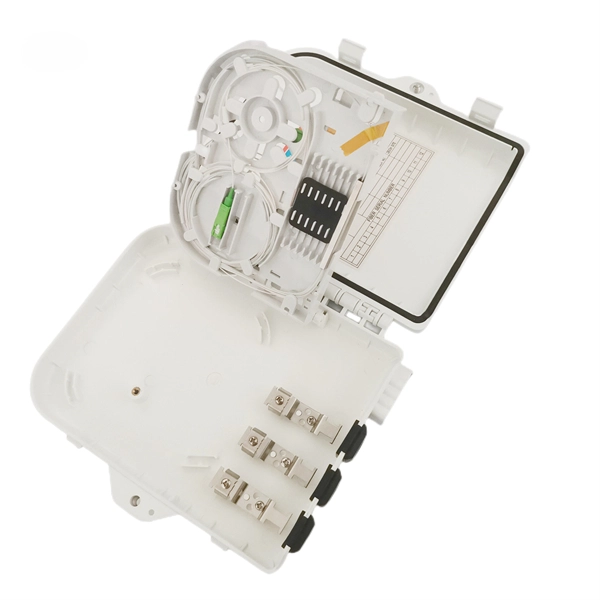
Illustrative equipment image

Optical Fiber Sensors for High-Temperature Monitoring:

This paper reviews the sensing principle, structural design, and temperature measurement performance of fiber-optic high-temperature sensors,

Fiber Optic Temperature Sensors: Types, Working

Explore the structure, working principles, advantages, and disadvantages of Fiber Optic Temperature Sensors for accurate temperature measurement in diverse

In-Depth Overview of Fiber Optic Temperature Sensors

Unlike traditional electrical temperature sensors (e.g., thermocouples, RTDs), fiber optic sensors offer significant advantages such as immunity to electromagnetic

Fiber Optic Temperature Sensor DTSX

The DTSX fiber optic temperature sensor, which uses optical fiber for the temperature sensor, quickly detects and locates abnormalities in equipment by

Fiber Optic Sensors & Transducers its Types and

Fiber optic-based temperature sensors can support a wide temperature range, from cryogenic temperatures to high temperatures up to 900°C. As the optical fiber is

Fiber Optic Temperature Sensors for High-Voltage

Fiber optic temperature sensors are advanced IoT devices that utilize optical fibers, which are thin strands of glass or plastic. They transmit light and detect even the

Fiber optic sensors

Our fiber optic sensors use a Gallium Arsenide (GaAs) crystal at the fiber tip, making them ideal for highly accurate temperature measurements in environments

Luxtron® Fiber Optic Thermometry Probes | Fiber optic temperature

This video gives an overview of AE Fluorotic Probes, highlighting their reliable and accurate temperature sensing in tough environments. It covers the Luxtron M-1100 & M-1200 Series System and various

Optical Temperature Sensors – fiber Bragg gratings,

This article provides a comprehensive overview of optical temperature sensors, which utilize optical technology, particularly fiber optics, for temperature

Temperature | DwyerOmega

Temperature products for process control and facility monitoring, including Accessories, Averaging Sensors, Connectors & Jacks, Head Mount Transmitters.

Optical Fiber Based Temperature Sensors: A Review

Summary of various optical fiber-based temperature sensors. Experimental setup for a temperature sensor based on an FLM.

Fiber Optic Temperature Sensors for High-Voltage Monitoring

Fiber optic temperature sensors provide accurate, EMI-immune monitoring in high-voltage environments with reliable real-time performance.

Fiber Optic Temperature Sensors: Operation & Applications

Find out more about fiber optic temperature sensors, their principle of operation & how they are applied in industrial temperature measurement.

What is Fiber Optic Sensing?

What is Fiber Optic Sensing? Fiber optic sensing uses the physical properties of light as it travels along a fiber to detect changes in temperature, strain, vibration (acoustics) and other parameters. Fiber

Fiber Optic Temperature Sensor DTSX

Using sensing technology that takes advantage of the characteristics of fiber optic cable, DTSX is a temperature sensor that can be laid out following the shape of the object to be measured. By

Temperature Measurement Using Optical Fiber

Optical fiber sensors can be used in cases where standard electrical measurement methods cannot be used. These may be areas with high electrical

Opsens Solutions| Fiber Optic Temperature Sensors

Fiber Optic Temperature Sensors: OTG Series (SCBG) OTG series fiber optics temperature sensors are designed for applications that require very focal temperature monitoring, fast response time and/or

Fiber Optic Temperature Sensors

In this chapter, a temperature sensor is demonstrated based on four different techniques; intensity modulated fiber optic displacement sensor (FODS), lifetime measurements, microfiber loop resonator

Related Video Reference

This video was associated with the source search result. Verify technical details against current product documentation and project requirements.

Share your network requirements

Share the fiber interfaces, termination capacity, cable route and evidence required for handover.

Send a project brief