
Technical notes
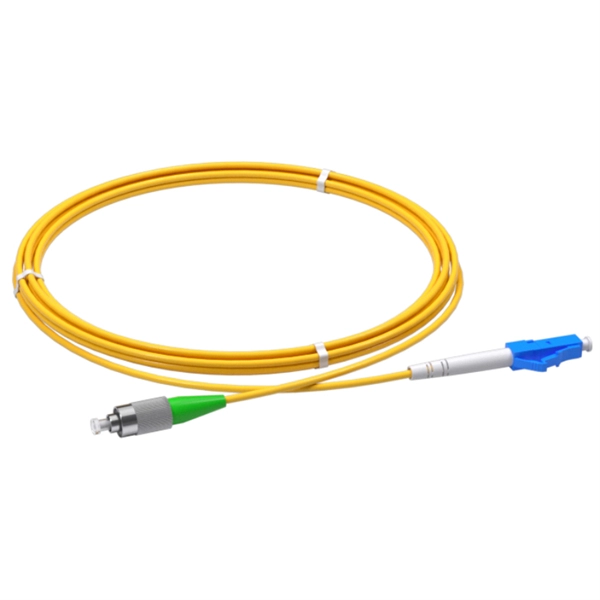
Passive Optical Components Overview
Passive optical components do not generate optical signals, amplify light, perform modulation, or interpret data. Their defining characteristic is functional neutrality: they influence how light
What Are Passive Optical Components and How Do They Work?
Passive components are inherently robust because they lack complex circuitry, making them highly reliable with minimal maintenance. Their function involves routing, dividing, combining,
Optical Passive Components: Types, Functions, and
Optical passive components are the quiet workhorses in fiber systems. They don''t add gain or require power, but they decide how efficiently, cleanly, and safely
passive optical component | Photonics Dictionary | Photonics
These components manipulate light signals through processes such as transmission, reflection, polarization, coupling, splitting, filtering, and attenuation. They are essential for directing and
Passive Optical Device
The SOI platform acts as an integrated photonic bench in which passive optical devices such as wavelength multiplexers and demultiplexers are realized while active functions such as lasers,
Passive Optical Device
Abstract Passive devices and circuits are the bedrock and framework of integrated photonic chips. They route, integrate, and interfere with optical signals, forming the basis for all of the functionalities
What Are Passive Optical Components and How Do They Work?
What Makes an Optical Component Passive The designation “passive” separates these components from active devices, such as lasers, amplifiers, or switches, which rely on electrical
Printed circuit board
Manufacturers may not support component-level repair of printed circuit boards because of the relatively low cost to replace compared with the time and cost of
List of Passive Electronic Components: Functions and
2. What are the most common types of passive electronic components?The most common types of passive electronic components include
Understanding Passive Components: Types, Functions, and Applications
Passive components are fundamental elements of electronic circuits that do not require an external power source to perform their functions. This main description will provide a comprehensive overview
Chapter 9: Passive Optical Components | GlobalSpec
Active components require some type of external energy either to perform their functions or to be used over a wider operating range than a passive device, thereby offering greater flexibility. Although
Chapter 10 Fiber Optic Passive Devices Flashcards | Quizlet
Study with Quizlet and memorize flashcards containing terms like Passive devices can be used to: A. Switch light B. Split optical signals C. Multiplex optical signals D. All of the above, The term "passive"
Passive Optical Networks (PON): Components and
Dive deep into the world of Passive Optical Networks (PON). Explore its key components, understand its structure, and discover the numerous
What are optical devices and their classification and
Optical devices are optoelectronic components used in optical communication that perform various functions based on the photoelectric
Active vs Passive Components: Difference & Examples
Active and passive electronic components are the core building blocks of electronic circuits, where active components require power to control or
Chapter 10 Passive Devices
Fibre-optic networks have experienced tremendous growth during the last few years, starting with backbone or long haul networks over Metro nets and having reached the residential area more
The Definitive Guide to Passive Optical Network (PON): Architecture
1. Introduction: Unpacking the "Passive" Revolution in Network Connectivity Passive Optical Network (PON) stands as a foundational technology in the evolution of modern
Light Coupling and Passive Optical Devices
In fiber optics, these functions are typically carried out by semiconductor lasers, optical fibers, and PIN or APD detectors. So far we have examined each of these areas separately in
Related Video Reference
This video was associated with the source search result. Verify technical details against current product documentation and project requirements.