
Technical notes
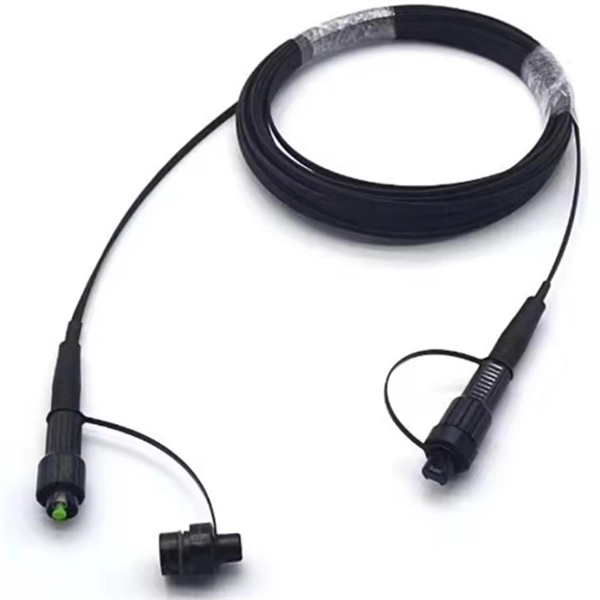
Installation height requirements for optical fiber cables
Although most fiber optic cables are not conductive, any metallic hardware used in fiber optic cabling systems (such as wall-mounted termination boxes, racks, and patch panels) must be grounded.
FOA Standard For Installing Fiber Optic Cable Plants
High Fiber Count Cables: High fiber count cables are flexible ribbon cables which generally have 864 fibers, 1728 fibers, 3456 fibers or up to 6912 fibers. These cables are not designed for pulling but are
What Is the Ideal Fiber Height for a Fiber Optic Connector?
Even a few years ago, our ability to control fiber height was mediocre. With today''s technology, especially recent advancements in final films, we have extraordinary control over fiber
The “Ideal” Fiber Height for a Fiber Optic Connector
Fiber height is a critical geometry parameter (along with Radius, Angle/Apex, and Key Error), which directly impacts the optical performance of the connector in the fiber optic network. Quality-minded
ITU-T Rec. L.163 (11/2018) Criteria for optical fibre cable
This Recommendation also describes how to mitigate the considerable risks and/or issues to which the optical fibre cable may be exposed when infrastructures are minimal during installation, maintenance
Optical Fiber Cable Optical Fiber Cable In
All Fiber Optic Cable reels should be stored upright Laying the reel on its side may cause damage to the reel flange and/or cause the cable layers to shift – This may cause cable to snag during de-reeling.
General Optical Fiber Cable Installation Considerations
Some key considerations for installing optical fiber cable are highlighted below. Failure to follow these guidelines may result in damage or attenuation increases of the optical fiber or cable.
Recommendation ITU-T L.103 (08/2024)
This document outlines the recommendations for single-mode optical fiber cables used in telecommunication networks within buildings, focusing on their mechanical and environmental
What is the Ideal Fiber Height for a Fiber Optic Connector?
Based on my first-hand, environmental testing of the declination of the ceramics under pressure and under temperature, I recommend targeting a fiber height of +/-20 nanometers. This
Standard for Installing and Testing Fiber Optics
Although most fiber optic cables are not conductive, any metallic hardware used in fiber optic cabling systems (such as wall-mounted termination boxes, racks, and patch panels) must be grounded.
Fiber Optic Cable Types – Multimode and Single Mode
Fiber Optic Cable Types – Multimode and Single Mode Application Fiber Optic connectors and cables are present in nearly every communications
The Fiber Optic Association
Other groups may have fiber optic standards also: ANSI is the governing bodies for standards in the US, NIST provides primary standards, IEEE has standards for networks like Ethernet, IWCS has
The FOA Reference For Fiber Optics
Outside Plant Fiber Optic Cable Jump To: Fiber Optic Cable Construction Fiber Optic Cable Types Cable Design Criteria Choosing Cables Cable Types: (L>R):
Overhead Optical Cable Construction Guidelines
In the communications industry, how to construct overhead optical cable is a problem that many front-line communications construction workers will encounter.
Fiber Optic Cable Sizes: A Comprehensive Analysis
Figure no 1 Guide to Fiber Optic Cable Sizes 1) fiber Optic Sizes A fiber optic cable consists of many components that serve to both protect the fragile fiber within and transmit data
The FOA Reference For Fiber Optics -Outside Plant
Follow the cable manufacturer''s recommendations as no one knows how to handle cable as well as the company which made it. Fiber optic cable is often custom
Aerial Cable Placing Procedure
The methods used to place aerial fiber optic cables are similar to those used to place copper cable. Optical cable is a high capacity transport medium that is sensitive to excessive tensile force, tight
A Step-by-Step Guide to Fiber Optic Cable Installation
In our digital age, high-speed internet and reliable communication networks are powered by fiber optic cables, which transmit data as light signals
Related Video Reference
This video was associated with the source search result. Verify technical details against current product documentation and project requirements.