
Technical notes
AEN052 Cable Trays and Optical Cables
While there are several specific types of listings for power cables, specifically for tray applications, there is no equivalent tray rating for optical fiber cables. According to the 2023 National
Cable Tray Technical Guide A practical guide to product selection and
In designing supports for a cable tray system, consideration should be given to the loads associated with future cable additions and any additional loading that may be applied to the cable tray system (e.g.,
Types of Cable Typically Used in Cable Tray
Types of Cable Typically Used in Cable Tray The purpose of a cable tray system is to support, route, and protect cable as part of the cable management system. Through NEMA and the Cable Tray
Cable Tray Questions | Cable Tray Institute
Answer: The NEC does not have a specific installation clearance, but indicates in section 318-6 (b) that cable trays should be exposed and accessible. Telecommunications standard TIA/EIA-569
Cables Allowed in NEC Tray Applications
There are many different types of cable tray including basket, ladder and solid-bottom. Tray can be manufactured in various types of material including aluminum, steel and fiber and other nonmetallic
Optical Cable Tray | Fiber Guide | Ducting | Raceway System | LongXing
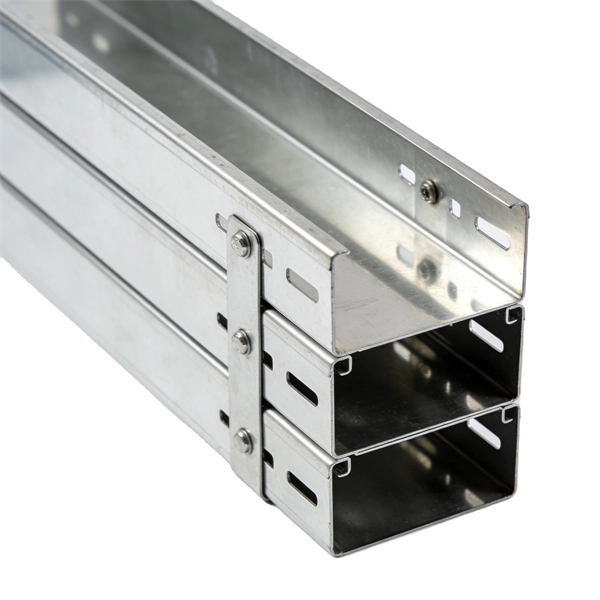
Optical cable tray is a system designed to protect and route fiber optic patch cords, cable assemblies to and from network cabinets, ODF and other terminal devices.
GENERAL INFORMATION
Cable trays or raceways often provide a convenient, safe and efficient method of fiber optic cable installation. Trays can be installed in ceilings, below floors and in riser shafts. When installing fiber
Optical Cable Tray | Fiber Guide | Ducting | Raceway
Cable tray is a raceway system designed to protect and route fiber optic patch cords, multi-fiber cable assemblies and intrafacility fiber cable to and from fiber
The FOA Reference For Fiber Optics
Most false floor systems include cable trays for fiber optic cables. An armored indoor cables is sometimes used in underfloor applications to protect the fiber from crushing by other cables.
Exploring Cable Tray Types and Applications
Although you can use cable trays anywhere wires need protection, a few common locations stick out, including: Generally, cable trays ensure accidental contact with people and machines is avoided.
Best Practice Guide to Cable Ladder and Cable Tray Systems
This guide covers cable ladder systems, cable tray systems, channel support systems and associated supports intended for the support and accommodation of cables and possibly other electrical
How optical communication cables work and how they
The initial application of optical cables was the trunk routes of large telecommunications networks, where cables were directly buried or laid in ducts
Types of Cable Typically Used in Cable Tray
Type ITC – Instrumentation Tray Cable – (NEC Article 727) – These types of cables are instrumentation cables and are available in shielded or unshielded constructions consisting of multiple single
Cable Tray Questions | Cable Tray Institute
Answer: No. Cable trays are a support system for electrical cables, power, signal, and communication and optical fiber cables. NEC section 300-8 does not permit any tube, pipe, or equal for water, air
Types of Cable Trays: Ladder, Perforated, Basket, Solid
Cable trays support insulated electrical cables in industrial and commercial settings. There are several types of cable trays, including ladder,
Cable Tray Types and Sizes
These cable tray systems serve as efficient alternatives to traditional wireways and electrical conduits, which fully enclose cables. Designed to support and protect all types of wiring—including high
Cable Pathways: A Data Center Design Guide and Best Practices
The cable tray is designed to support both electrical and data cables and is typically more robust than a ladder rack. It requires a pre-design effort because it is not flexible to work with in the field.
Cable Tray SHIB NAL
Cable trays are not raceways, but they are treated as a structural component of a facility''s electrical system. Cable trays are a part of a planned cable management system to support, route, protect and
Related Video Reference
This video was associated with the source search result. Verify technical details against current product documentation and project requirements.