
Technical notes
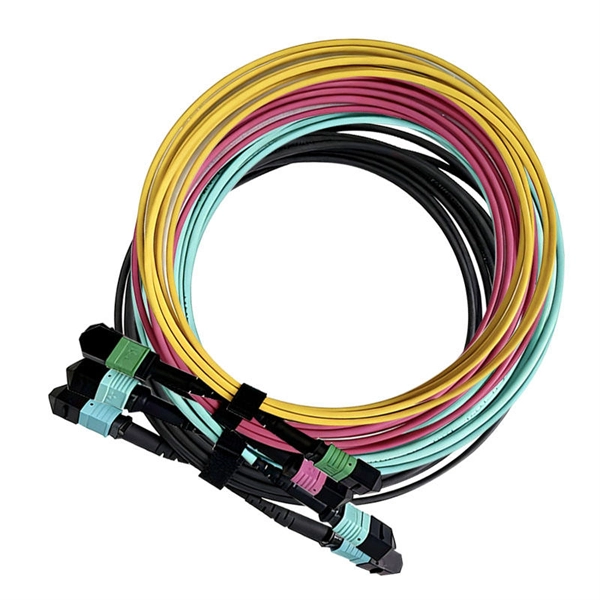
Optical Coupler
A directional optical coupler can be made by simply fusing fibers together for a certain length known as fused fiber coupler, or using coupled ridge optical waveguides on a PLC.
Fiber Coupler
They can operate bidirectionally and their function can be active or passive depending on the strength of the input signal propagating through it. They find potential applications in multiplexing devices,
Tutorial Passive Fiber Optics, Part 8: Fiber Couplers and Splitters
Dichroic couplers can be used to combine a pump and a signal input for a fiber amplifier, or to remove residual pump light after the amplifier. For high-power fiber lasers and amplifiers, one often needs
Fiber Coupler Tutorials
For combining light of different wavelengths, Thorlabs offers a line of single mode wavelength division multiplexers (WDMs). The ports on our 1x2 couplers are configured as shown in Figure 1A. Excess
Optical Networks
Couplers and splitters are used to combine optical signals and/or split the optical signals. The vast majority of single mode optical couplers employ the principle of resonant coupling.
The "Invisible Hub" of Optical Communication: Understanding
An optical fiber coupler is a passive optical device that can efficiently and stably transmit optical signals from one or more optical fibers to another or more optical fibers.
How a Fiber Coupler Works: From Physics to Manufacturing
Two manufacturing technologies dominate the production of fiber couplers, each offering advantages for different applications. The traditional method is the Fused Biconical Taper (FBT)
The role and working principle of fiber optic couplers
It belongs to the field of optical passive components and is used in telecommunication networks, cable television networks, subscriber loop systems, and local area networks. The following
Fiber Optic Couplers Information
Types of fiber optic couplers include splitters, combiners, X-couplers, trees, and stars, which all include single window, dual window, or wideband transmissions.
A Review of Optical Coupler Theory, Techniques, and Applications
optical couplers. Coupling at optical frequencies presents challenges to achieving high efficiency, compactness, high fabrication tolerance, and ease of integration in photonic integrated
Optocouplers Selection Guide: Types, Features, Applications
Optocouplers are electronic components which use light waves to provide electrical isolation while transferring an electrical signal. They are sometimes known as opto-isolators, photocouplers, or
Optocoupler Basics: Definition, Types, and Features
An optocoupler is a coupling device used to couple optical signals. It''s primarily employed to combine and split signals in optical networks, and it''s also referred to as a directional coupler. Image alt:
Optical Couplers | Springer Nature Link
Optical couplers are one of the most important classes of integrated optical components. These devices are used in directional routing of a light signal from one waveguide to another or in
Demystifying the Fiber Optic Coupler: The Unsung Hero of Light
A fiber optic coupler splits or combines light signals in optical networks, improving data flow, reliability, and network flexibility for various applications.
What Is Optocoupler and Its Application with Examples
Ⅰ Introduction This article focuses on the electronic component known as the Optocoupler. (For the fiber-optic networking component, please refer to Optical Isolators). This guide
A Review of Optical Coupler Theory, Techniques, and Applications
Since optical interconnects and directional couplers are integral components in photonic integrated circuits, there is a rising demand to reduce their footprint while maintaining high efficiency
Fiber Optic Coupler Types and How to Make Couplers
Fiber Optic Coupler Types and How to Make Couplers Fiber Optics For Sale Co. 89.1K subscribers 461 92K views 15 years ago
Key Optical Components in Fiber Optic Systems
Explore key optical components such as transmitters, detectors, couplers, and amplifiers used in fiber optic systems.
Related Video Reference
This video was associated with the source search result. Verify technical details against current product documentation and project requirements.