Skip to content
AK OPTICALSystems Send a project enquiry
Reference library

Fiber Optics in Sensors

Published
  • Fiber
  • Optics
  • Sensors
Source context

AI source overview

Fiber optic sensors use light transmitted through optical fibers to detect physical, chemical, or environmental changes with high sensitivity and immunity to electromagnetic interference.

Working Principles

Fiber optic sensors operate by modulating light properties—such as intensity, wavelength, phase, or polarization—within an optical fiber in response to external stimuli. The system typically includes a light source, optical fiber, sensing element (transducer), and detector. Changes in the environment, such as temperature, pressure, strain, or chemical composition, alter the light signal, which is then converted into an electronic signal for measurement and analysis.

Types of Fiber Optic Sensors

Intrinsic Sensors: The fiber itself acts as the sensing element. Environmental changes directly affect the light traveling through the fiber, enabling distributed sensing over long distances. Extrinsic Sensors: The fiber transmits light to and from an external transducer.

The sensing occurs outside the fiber, allowing measurements in inaccessible or hazardous locations. Hybrid Sensors: Combine intrinsic and extrinsic features, using the fiber both as a sensing medium and a light conduit. Fiber optic sensors can also be classified based on the light modulation mechanism: Intensity-based sensors: Detect changes in light intensity due to displacement, pressure, or obstruction.

Spectral-based sensors: Measure wavelength shifts caused by strain, temperature, or chemical interactions, offering high precision.

Applications

Fiber optic sensors are widely used across multiple domains: Structural Health Monitoring: Real-time monitoring of bridges, buildings, and aerospace structures for strain, stress, and deformation. Aerospace: NASA's Fiber Optic Sensing System (FOSS) monitors aircraft structural stress, flexible wing flutter, and spacecraft components using hair-thin fibers with thousands of data points. Energy and Power Systems: Monitoring high-voltage equipment, battery health, and pipeline integrity, benefiting from immunity to electromagnetic interference.

Medical and Biomedicine: Non-invasive monitoring of physiological parameters in environments where electrical sensors are unsuitable. Environmental Sensing: Distributed fiber optic sensing (DFOS) enables large-scale monitoring of temperature, pressure, and chemical changes in urban infrastructure or natural environments.

Technological Advancements

Recent innovations include: Fiber Bragg Gratings (FBG): Enable high-resolution strain, temperature, and pressure measurements. Distributed Sensing: Techniques like Raman, Brillouin, and Rayleigh scattering allow continuous monitoring along the entire fiber length. Integration with AI and IoT: Enhances predictive maintenance, real-time analytics, and smart infrastructure monitoring.

Flexible and Stretchable Fibers: Allow embedding in robotics and wearable devices for tactile sensing.

Advantages

Fiber optic sensors offer: High sensitivity to small physical changes. Electromagnetic interference immunity, ideal for high-voltage or flammable environments. Long-distance signal transmission with minimal attenuation.

Compact and lightweight design, suitable for aerospace and portable applications. Fiber optic sensing technology continues to expand, transforming ordinary optical fibers into versatile, high-precision sensing networks for industrial, scientific, and environmental applications.

Research context

Reference summary

A fiber-optic sensor is a that uses either as the sensing element ("intrinsic sensors"), or as a means of relaying signals from a remote sensor to the electronics that process the signals ("extrinsic sensors"). Fibers have many uses in. Depending on the application, fiber may be used because of its small size, or because no is needed at the remote location, or because many sensors can be along the length of a fiber by using light wavelength shift for.

Additional context

Source notes

A fiber-optic sensor is a that uses either as the sensing element ("intrinsic sensors"), or as a means of relaying signals from a remote sensor to the electronics that process the signals ("extrinsic sensors"). Fibers have many uses in . Depending on the application, fiber may be used because of its small size, or because no is needed at the remote location, or because many sensors can be along the length of a fiber by using light wavelength shift for …

From reference to enquiry

Questions for your project

Use these editorial prompts alongside the linked excerpts. They identify items to confirm for your project.

Technical notes

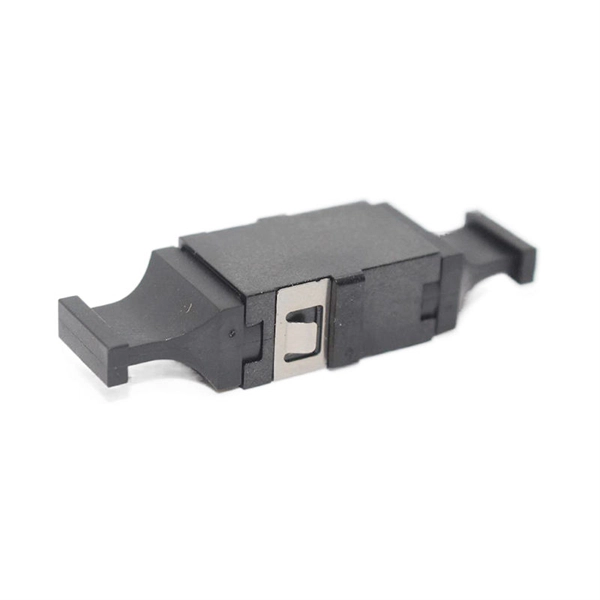
Illustrative equipment image

Fiber-optic sensor

A fiber-optic sensor is a sensor that uses optical fiber either as the sensing element ("intrinsic sensors"), or as a means of relaying signals from a remote sensor to the electronics that process the signals ("extrinsic sensors"). Fibers have many uses in remote sensing. Depending on the application, fiber may be used because of its small size, or because no electrical power is needed at the remote location, or because many sensors can be multiplexed along the length of a fiber by using light wavelength shift for

Fiber Optic Sensor : Types, Working, Interfacing & Its Applications

Imagine a world where the Internet doesn''t just connect but senses —detecting earthquakes, monitoring battery health, or safeguarding critical

Fiber Optic Sensors: Fundamentals, Principles & Applications

Fiber serves as a continuous sensing element. Sensing is based on. { 1 + ln( / ) z + ln( / ) } Equipped with safety features and remote fault monitoring.

Fiber-Optic Pressure Sensors: Recent Advances in

This paper conducts a systematic analysis of the sensing mechanisms in fiber-optic pressure sensors, with a particular focus on the

What is a Fiber Optic Sensor?

A fiber optic sensor operates with an optical fiber cable connected to a dedicated light source. These sensors offer great mounting flexibility and can be used is in

Fiber Optic Sensors: Principles, Types, and Uses

Fiber optic current sensors offer several advantages over traditional electrical sensors, including immunity to electromagnetic interference, the ability to function in extreme environments,

Fiber Optic Sensor

Fiber optic sensors are defined as devices that utilize optical fibers to measure a variety of stimuli, including mechanical, thermal, electromagnetic, radiation, chemical, and flow characteristics. They

Optical Fiber Sensors and Sensing Networks: Overview of the Main

Optical fibers provide sensing solutions for many types of applications and environments with high performance. The design of the fiber sensors can take advantage of one or several optical

Introduction to Fiber Optic Sensors and their Types

Introduction to Fiber Optic Sensors and their Types with Applications In the year 1960, laser light was invented and after the invention of lasers, researchers had

Fiber Optic Sensors: Short Review and Applications

An extensive review of optical fiber sensors and the most beneficial applications is presented in this chapter. Although electrical sensing technologies have been successfully deployed

Turning Fiber into a Sensing System: The Magic of

Imagine a world where the Internet doesn''t just connect but senses—detecting earthquakes, monitoring battery health, or safeguarding

Optical fiber sensors in biomedical: trends and emerging research – A

Optical fiber sensors represent a rapidly advancing technology with substantial applications across various fields, particulary in the biomedical domain. The unique properties of

Fiber Optic Sensor : Types, Working, Interfacing & Its Applications

Fiber optic sensor is a new branch in fiber optics in competition with the existing communication system. This is a very interesting and also well-known topic in the research field.

Fiber optic sensors and fiber optics | Baumer USA

Fiber optic sensors and fiber optics - limitless and customized The perfect solution with the fiber optics sensor toolbox Over 350 customized fiber optic solutions Smaller, more precise, faster Robust - High

Review of Optical Fiber Sensors: Principles, Classifications and

Optical fiber sensors (OFSs) have emerged as essential tools in the monitoring of physical, chemical, and bio-medical parameters in harsh situations due to their high sensitivity,

Review Advancements in fiber optic tactile sensors: A comprehensive

Highlights • Fiber optic tactile sensors enhance mechanical stimuli perception through skin pressure. • Advantages include EMI immunity, high-temperature robustness, and compact form. •

Fiber Optic Sensors

Fiber optic sensors are compact because the detection circuit is located in the amplifier, allowing for detection even in narrow spaces. Installation and

Optical Fibre-Based Sensors—An Assessment of Current Innovations

Optical fibre sensors are an essential subset of optical fibre technology, designed specifically for sensing and measuring several physical parameters. These sensors offer unique

Related Video Reference

This video was associated with the source search result. Verify technical details against current product documentation and project requirements.

Share your network requirements

Share the fiber interfaces, termination capacity, cable route and evidence required for handover.

Send a project brief