
Technical notes
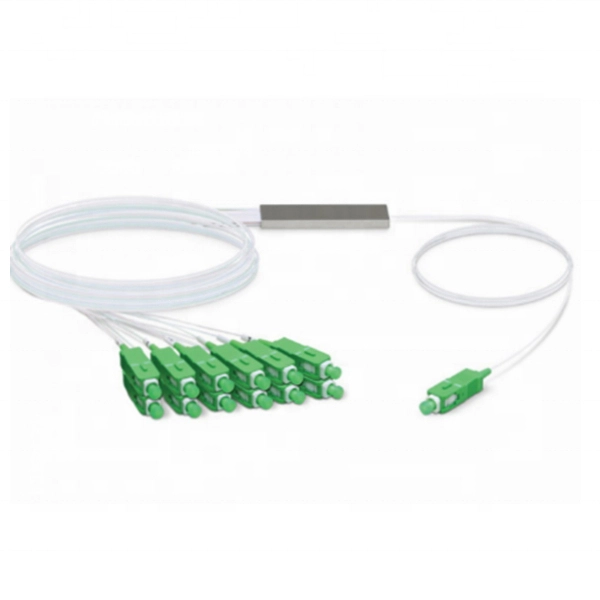
Understand GPON Technology
The OLT is connected to the optical splitter through a single optical fiber, and then the optical splitter connects to ONUs/ONTs. GPON adopts WDM to transmit data of different
GPON Technology Tutorial
On the same fiber, GPON can use Wavelength Division Multiplexing (WDM) technology to enable bi-directional signal transmission. According to
XG-PON and XGS-PON: Understanding the Principles and
10G GPON uses Wavelength Division Multiplexing (WDM) technology to achieve bidirectional data transmission on a single fiber within the same ODN network by using different
The Role of GPON ONU (ONT) and GPON OLT in
GPON systems use WDM (Wavelength Division Multiplexing) to achieve mandatory bi-directional transmission over a single fiber. To separate
Gigabit Passive Optical Networks (GPON) | Electronics Tutorial
GPON uses wavelength-division multiplexing (WDM) with standardized wavelength bands: 1490 nm for downstream and 1310 nm for upstream transmission. This differs from Ethernet Passive Optical
8 x 10 Gbps Green WDM-PON system and its Performance Analysis
The performance of the system is analyzed in terms of the bidirectional fiber limited link length and limit on maximum input power of individual channel for the transmission.
GPON Testing
Over a single bidirectional fiber – in this case GPON use Wavelength Division Multiplexing (WDM) with 1490 nm wavelength for downstream traffic and 1310 nm wavelength for upstream traffic
Introduction To Data Transmission Methods In PON
PON networks use different wavelengths for upstream and downstream transmission over the same fiber. The downstream wavelength is
RLTECH PON (PON Line Indicators and Split Ratio Design)
Its single-fiber bidirectional transmission mechanism employs WDM, where downstream traffic adopts broadcast mode (1490nm wavelength), and upstream traffic uses TDMA (1310nm ).
SYMMETRIC UPLINK AND DOWNLINK TRANSMISSIONS FOR
ABSTRACT The convergence of optical and wireless technologies holds great promise for the development of future broadband access networks. As such, we work on the idea of integrating the
Understand GPON Technology
Wavelength-Division Multiplexing (WDM) - Wavelength-division multiplexing (WDM) is a technology that multiplexes a number of optical carrier
A novel full duplex 16 Gbps SCM/ASK radio over fiber WDM-PON
This paper successfully demonstrates the bidirectional network architecture for RoF integrated with ASK/SCM WDM-PON based on wavelength reuse scheme. Sixteen equally spaced
International Journal of Engineering Research and General Science
Bidirectional WDM-PON system with OFDM downlink and uplink transmission using TWSOA remodulation 1Vidya K. Suhbash, 2Sunaina N.
Performance Impact of Signal Reflections in a Single–Fiber
Funding Agency: I. Introduction In single–fiber bidirectional systems, signals are transmitted in opposite directions in a single fiber for exchanging information between two nodes. As a result, cost for
GPON and XG-PON wavelength allocation The main
GPON and XG-PON wavelength allocation The main components of the XG-PON1 network architecture are OLT in the central office, ODN and ONU/ONT units at
Design and Implementation of a Fiber to the Home FTTH Access
2. COMPONENTS OF GPON FTTH ACCESS NETWORK A passive optical network (PON) is a point-to-multipoint, shared optical fiber to the premises network architecture in which unpowered optical
Wavelength conversion at the hybrid PON system
The proposed system of bidirectional fibre links uses 1270 nm and 1577 nm wavelengths for uplink and downlink transmissions, respectively.
A Comprehensive Guide to GPON and EPON Technologies in PON
Similar to GPON, EPON presents an effective fiber access solution with a coverage radius extending up to 20 kilometers. EPON leverages the WDM (Wavelength Division Multiplexing)
Related Video Reference
This video was associated with the source search result. Verify technical details against current product documentation and project requirements.