
Technical notes
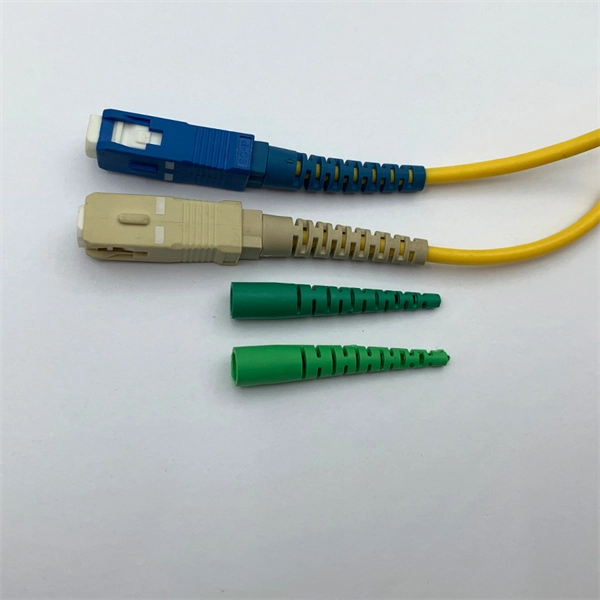
Passive Optical Device
In this chapter we will survey the key passive optical devices used in integrated photonic chips and compare the various approaches used to meet datacom application needs.
Optical Components and Modules
Optical passive components from individual isolators, couplers and PM components, to multi-function integrated components such as isolator with WDM, isolator with PM Beam Combiner, and circulator.
Passive optical network
OverviewComponents and characteristicsHistoryNetwork elementsUpstream bandwidth allocationVariantsEnabling technologiesFiber to the premises
A passive optical network (PON) is a fiber-optic telecommunications network that uses only unpowered devices to carry signals, as opposed to electronic equipment. In practice, PONs are typically used for the last mile between Internet service providers (ISP) and their customers. In this use, a PON has a point-to-multipoint topology in which an ISP uses a single device to serve many end-user sites using a system suc
What Is Passive Optical Networking (PON)?
A single fiber-optic cable runs from the OLT to a nonpowered (passive) optical beam splitter, which multiplies the signal and relays it to many optical network terminals
Understanding the Magic Behind PON Modules
A PON module, or Passive Optical Network module, serves as a pivotal device in telecommunications networks, facilitating the transmission of data, voice, and video signals over fiber
What Are Passive Optical Components and How Do They Work?
Passive optical components play a fundamental role within this infrastructure. These engineered devices manage and direct light signals through a network without requiring an external
Optical Signal Switching and Routing | VIAVI Solutions Inc.
Optical switch solutions, built on industry-leading fourth-generation VIAVI technology, come in multiple formats, including matrix switches, 1XN and 2XN for
PASSIVE OPTICAL LAN
The OCC POL Solution ensures network traffic is transported between these devices over a passive optical fiber infrastructure that generally consists of the following components:
Passive DWDM Solutions | Mux/Demux, DCM, OADM
The device supports a wide range of CWDM and WDM mux/demux, OADMs and DCMs in various configurations, suitable for any type of CWDM, DWDM, OTN
Passive Optical Networks (PON): Components and
Dive deep into the world of Passive Optical Networks (PON). Explore its key components, understand its structure, and discover the numerous
The Most Comprehensive Guide Of Optical Modules
Explore the ultimate guide to optical modules. Learn types, functions, performance metrics & how to choose the right module for your fiber network.
Introduction to Passive Optical Network
Introduction to Passive Optical Network A passive optical network (PON) or Gigabit Passive Optical Network (GPON) is a point-to-multipoint (P2MP) network that uses a combination of active
Cisco 10GBASE SFP+ Modules Data Sheet
The Cisco 10GBASE SFP+ modules give you a wide variety of 10 Gigabit Ethernet connectivity options for data center, enterprise wiring closet,
Passive Optical Networks (PON): Components and
Conclusion Passive Optical Networks (PON) are key to enabling the high-speed, high-bandwidth, and efficient network connections that our
What Is Passive Optical Networking (PON)?
Passive optical networking (PON), like active optical networking, uses fiber-optic cabling to provide Ethernet connectivity from a main data source to endpoints.
Optical Passive Components and Their Applications
Optical passive components play a significant role in today''s data networks and FTTH applications to establish effective fiber communication.
Optical Components and Modules
Passive Components Optical passive components from individual isolators, couplers and PM components, to multi-function integrated components such as isolator
The Definitive Guide to Passive Optical Network (PON): Architecture
1. Introduction: Unpacking the "Passive" Revolution in Network Connectivity Passive Optical Network (PON) stands as a foundational technology in the evolution of modern
Related Video Reference
This video was associated with the source search result. Verify technical details against current product documentation and project requirements.