
Technical notes
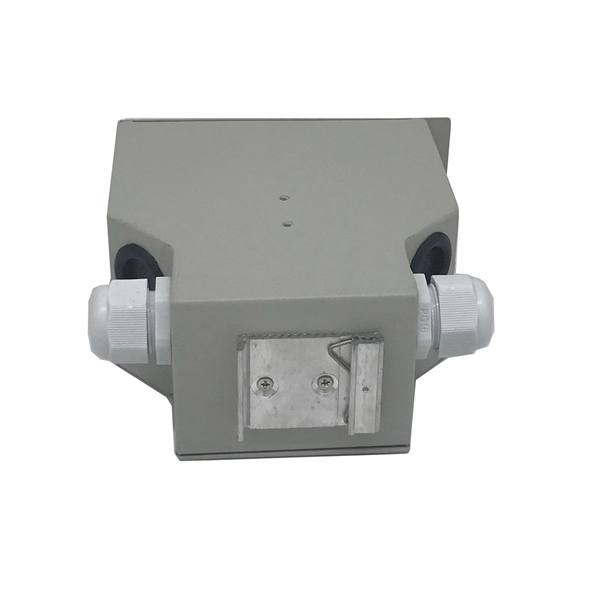
Fiber Optic Sensor
By using new technology materials such as Fiber Coatings, the operational ranges of Fiber Optic Sensors have been increased and they also started to be used in high-temperature environments
Fiber-Optic Pressure Sensors: Recent Advances in
This paper conducts a systematic analysis of the sensing mechanisms in fiber-optic pressure sensors, with a particular focus on the
Optical Fiber Sensors in Extreme Temperature and Radiation
After a brief introduction of the principles of OFSs and mechanisms of interrogation, this paper focuses on the existing works for the above three operating environments.
Photonics | Special Issue : Advanced Optical Fiber
In general, optical fiber sensors are capable of operating under extreme environmental conditions, such as high temperature, high pressure and
From Specialty Fibers to Sensor Systems: Engineering
Advancements in specialty fibers, fibered components, and photonic integration are enabling high-performance sensors for harsh environments.
A review of fiber optic sensing in geomechanical applications at
Fiber optic sensing (FOS) offers a promising alternative due to its scalability, durability, and high spatial resolution, making it particularly suitable for harsh environments and large-scale
AI-Assisted Fiber Optic Sensors for Simultaneous Measurement
The machine learning (ML) approach has brought a thoroughgoing rehabilitation in the field of fiber optics-based sensing mechanisms due to its capabilities of extracting a huge chunk of
Fiber Optic Sensors for Harsh Environments
Technical challenge – drift of point sensor response too large relative to 1-19% O2 response. Approach for improving response, lowering drift (e.g., utilizing single crystal fiber) explored near end of EY21.
Embedded Fiber Optic Sensors in Structural Materials for Sensing in
Fiber optic sensors are capable of multiplexed sensing of spatially distributed temperature and strain with high spatial resolution, and can offer stable measurement at extreme environments Embedding
Development of intelligent algorithms for distributed fiber disturbance
Distributed optical fiber sensors (DOFSs) are a developing IoT infrastructure and offer a promising solution for continuous monitoring of extensive areas, but they face challenges in complex
Fiber Optic Sensor
Fiber optic sensors are defined as devices that utilize optical fibers to measure a variety of stimuli, including mechanical, thermal, electromagnetic, radiation, chemical, and flow characteristics. They
Fiber-Optic Pressure Sensors: Recent Advances in
Fiber-optic sensing (FOS) technology has emerged as a cutting-edge research focus in the sensor field due to its miniaturized structure, high
A Review of Multiparameter Fiber-Optic Distributed Sensing
This review summarizes recent progress and emerging trends in multiparameter optical fiber sensing, emphasizing techniques that enable the simultaneous measurement of temperature,
Optical Fiber Sensors for High-Temperature Monitoring: A Review
High-temperature measurements above 1000 °C are critical in harsh environments such as aerospace, metallurgy, fossil fuel, and power production. Fiber-optic high-temperature sensors are
Fiber Optic Sensors for Harsh Environments: Environmental
Request PDF | On Jan 1, 2018, Hamid Alemohammad and others published Fiber Optic Sensors for Harsh Environments: Environmental, Hydrogeological, and Chemical Sensing Applications | Find,
Fiber Optic Sensors for Harsh and High Radiation Environments in
The radiation environment and the harsh conditions in which these sensors will operate represent a challenge for the potential user in the aerospace vehicle design and the fiber optic sensor
Optical Fibre-Based Sensors—An Assessment of Current Innovations
Optical fibre sensors are an essential subset of optical fibre technology, designed specifically for sensing and measuring several physical parameters. These sensors offer unique advantages over traditional
Fiber Optic Sensors for Harsh and High Radiation Environments in
Specialty optical fibers, with different materials or more complex designs, are very interesting for sensors, amplifiers, or fiber-based lasers and have shown future growth potential and growing
Related Video Reference
This video was associated with the source search result. Verify technical details against current product documentation and project requirements.